Digital Evangelism
  • Home
    • Big Data
    • Social Media
  • BLOG
  • RESOURCES
    • RESOURCE MENU >
      • ADVENTIST IDENTITY GUIDELINES
      • BIG DATA RESOURCES
      • BRANDING, IMAGE & DESIGN RESOURCES
      • CHURCH/MINISTRY SPECIFIC RESOURCES
      • COPYRIGHT & TRADEMARK BASICS
      • COURSES
      • EMAIL RESOURCES
      • GUIDANCE FOR HIRING SOCIAL MEDIA POSITIONS
      • PODCASTS
      • REPORTS & CASE STUDIES
      • SOCIAL MEDIA RESOURCES
      • (SOCIAL) VIDEO RESOURCES >
        • HOW TO START A VIDEO MINISTRY
      • TEXTING 4 CHURCHES
      • TRACKING & ANALTYICS
      • WATCH VIDEOS & TUTORIALS
      • WEBSITE TIPS
    • SOCIAL MEDIA GUIDELINES
  • SEO
    • SEO TERMS
  • Digital Discipleship & Evangelism
  • COVID-19 RESOURCES
  • eNEWSLETTER

Blog

#DigitalEvangelism

Sample Guidelines for Hosting Online Small Groups, Forums, or Video Conferences

4/29/2019


Jamie Jean Schneider Domm

Digital Strategist for the North American Division. ​​​​​​

Created in partnership with from Amie Regester of The Belligerent Bible Worker and Ask a Christian. 

Sample Guidelines for Hosting Online Small Groups, Forums, or Video Conferences Picture
Feel free to adjust to your community needs. Depending on your audience, you may want to consider a more casual tone.

We’re excited that you have decided to join our online small group/discussion forum. To make this a positive and safe environment for all, please consider the following guidelines and recommendations that will help us get the most out of our shared experience. 
  • Confidentiality: What’s said in group discussions, stays in the group. This is the most important ground rule. No one wants to find out that he or she has been the subject of gossip or well-meaning “prayer discussions.” Always ask permission before sharing personal or sensitive information about another person. Do not publish, post, or release information that is considered confidential. This includes private medical information without direct approval from the person or their family. Follow federal requirements such as the Health Insurance Portability and Accountability Act (HIPAA) of 1996 and the Family Educational Rights and Privacy Act (FERPA).
  • Be honest and transparent: Please maintain integrity and honesty to help foster trust in the relationships we develop within our online group.
  • Timing: To be respectful of those with tight schedules, we ask that participants join live chats or video conferences on time. You are a big part of making this an interesting and fulfilling group!
  • Vocal participation: Everyone should commit to participate as a listener and as a speaker.
  • Preparedness: Please do your best to complete readings and research ahead of time so you can get the most out of our discussion sessions, but also feel empowered to contribute.
  • Minimize distractions: When utilizing video conferences, as much as possible, please limit background noise and distractions, turn off or silence your mobile device, do not take separate phone calls during discussions, and put your speakers on “mute” if you’re not speaking.
  • Be respectful and remember your manners: We recognize and value diversity of opinion within our online community. Therefore, we ask that you please always seek empathy first, and do not interrupt when others are speaking. Be tolerant towards others’ viewpoints; respectfully disagree when opinions do not align. We encourage comments that are reasonable and related to the topic being discussed, as long as they are presented in a manner that is constructive, polite, and respectful, honoring the dignity of others in the process. Avoid putdowns of any kind. Treat others online as you would treat them in real life. Be encouraging of one another. Everyone is in a different place spiritually; do your best to be understanding and supportive.
  • Tone of voice: We want to welcome all into our community and create a place for open and honest discussion. Let’s make sure our tone of voice is friendly, positive, welcoming, and uplifting, as though we are speaking to each other in person. This is especially important in comments or text, as lack of speech inflection and body language can make the meaning seem harsher than what was intended. Avoid condescending language. Strive to be open, empathetic, and engaging. Let’s be a community that is committed to encouraging people with different experiences and perspectives to share their ideas in a productive manner, building a bridge of empathy, understanding, and respect. We are all at different places in our spiritual journey; let’s strive to be supportive.
  • Posting frequency: We would love for everyone to commit to posting regularly, but we understand that some may feel more comfortable just following the conversation, especially in the beginning. For those who want to contribute directly to the discussions, remember that quality of content is more important than quantity. Stay engaged in the conversation, but don’t post too much and overwhelm or take over the conversation. We all want to and should be heard. Let’s commit to respecting others’ perspectives and desire to share. It’s important to listen more than we speak and to create space for everyone to contribute.
  • Share your story: Be human, have fun, exchange ideas, and connect with others. Let’s allow our lives to act as powerful witnesses of God at work, as well as an encouragement to others. Humbly sharing our walk of faith, our doubts, and the challenges we face involves a great deal of vulnerability. This vulnerability can be our strength as we remove the masks we all wear and create a community of support through real connections based on authenticity, shared values, and goals.
  • Content: We encourage comments that are reasonably related to the topic being discussed, as long as they are presented in a manner that is constructive. Refrain from posting advertisements, political statements, sales promotions, or spam. Do not share inaccurate, irrelevant, or misleading information that is off-topic or self-serving. This also means that your multi-level marketing posts will need to find another home.
  • Protect yourself and loved ones: Be careful about what personal information you share online, and regularly check your privacy settings. Never publicly share your home address, social security numbers, login credentials to ANY account (especially passwords), credit card information, security question answers, complete birth date, etc.
  • Act responsibly and ethically: Be honest, be professional, and be kind. Always verify questionable content with credible sources before sharing information and remember to honor others’ privacy. Respect the intellectual property rights of others and always give credit where credit is due.
  • Images and language: Do not post sexually explicit images of yourself or others. Do not use insulting, demeaning, vulgar, prejudiced, racist, threatening, or violent language or profanities. Avoid gossip, mean-spirited comments, mocking or shaming others, bullying, making false statements against others, and any other behavior that causes emotional harm or distress. Members who attack other members will be removed from the group to maintain a safe environment.
  • Avoid conflict: Avoid publicly discussing controversial topics and politics where emotions can run high and result in inflammatory or inappropriate discussions. Take it offline, have a private discussion, or simply do not respond. Always show respect for others’ opinions. When dealing with complex or emotional issues is necessary, frame responses in a positive way that seeks to bridge the divide. God loves all His children, and His children are a diverse people.
 
Consequences:
Appropriate action will be taken when these guidelines are violated. A warning may be given but is not guaranteed; in severe cases, violations can mean removal from the group. Community members should voice concerns and report behavior that violates the guidelines to the administrator via private message. The administrator reserves the right to remove inappropriate comments or content without notice.

Agreement:
By joining this community, you are considered to be in agreement with the terms and conditions listed above.
​
As the mediator/leader for this online group, I commit to:
  • Follow the conversation and actively participate. Check daily for comments, questions, and messages, and respond in a timely and meaningful way. Seek to understand and meet the expressed needs of the community.
  • Delete any spam posts and offensive comments immediately. Constructive feedback will be taken seriously as an opportunity to listen to and respond to the needs of our community.
  • Remove advertisements, political statements, or sales promotions immediately.
  • Making sure that our community is uplifting and safe. Therefore, any member who attacks or bullies another member will be removed from the group.
  • Reflect our community values at all times and frame every response with the spiritual and emotional health of members as a priority. Be diplomatic, professional, and empathetic.
  • Redirect members to proper resources when needed or desired. Always follow up to make sure members received an answer or help with their question.

For more social media policies and guidelines, click here. 
Download a PDF of Proper Etiquette for Online Small Groups
File Size: 139 kb
File Type: pdf
Download File

How You Can Positively Impact Others through Digital Discipleship

1/28/2019


Mervi Kalmus

A pastor in Estonia and active digital disciple. 

Mervi Kalmus Digital Disciple Picture
Mervi Kalmus, a pastor in Estonia, opens her heart and steps out of her comfort zone, to make a difference in the lives of her friends.

​FOR MY FRIENDS, PRAYER IS JUST ONE ‘LIKE’ AWAY

I am a very private person. I am certainly not one of those people who would constantly post ’Jesus Loves You’ memes or gospel songs on Facebook. Shouting out loud about my beliefs or life circumstances is really not my cup of tea. On the other hand, I am a devoted follower of Jesus and thus, under the jurisdiction of His Great Commission. This inevitably leads to moments when these two aspects of my life clash.
​
Last September I could sense one of those clashes coming my way. For some time I had had it in my heart to offer my friends an opportunity for prayer. Yet the other, introverted, private part of me thought that I should not rush with it. Maybe the idea would leave if I remained quiet long enough. 

It did not leave. I had to pick up my courage and act. 

It was a Friday afternoon. I was on a train heading from London to Newbold and finally decided I could not ignore that little voice any more. It somehow helped me that I was on a vacation, away from Estonia, away from my usual surroundings, and away from the very people that I was about to reach out to, and whose criticism could intimidate or even hurt me. 

Sitting on the train, I opened my Facebook and wrote to all my Estonian friends. I told them I would take extra time for prayer the next day. If any of my friends wanted me to pray for them personally, they just needed to like my post. If they had any specific prayer request, they could private message me. Then I switched off my phone.

I was a little scared, not knowing what to expect or how to feel about the whole thing. What happened next, I certainly did not anticipate. 

Dozens and dozens of people liked and commented on my post, some of them writing me private messages and pouring their hearts out to me. And what a cross-section: young and old, Christians and atheists, close friends and mere acquaintances, straight and gay, housewives and pastors, and everything from students to one of the most acclaimed concert pianists in this country. 

People who chose to write to me told me about their struggles. They shared health problems and the burden of singleness, worries about their loved ones or the desire to serve God and His church yet not knowing how to do it. 
I read those messages late at night until I cried. The next morning, I dutifully wrote down all 76 names and prayed for each one of them. I was lucky to have a free Sabbath, a luxury a minister rarely has these days, because my private prayer meeting lasted for a half a day. 

It was toward Sabbath evening by the time I was done (read: exhausted) with my prayer meeting and wanted to take down my post from the previous evening when I received the most touching message of all. It came from a childhood acquaintance whom I had not seen for some 20 years. She asked if there was still any room in my prayer list and told me she would appreciate my prayers for her one-year-old son waiting for open heart surgery.
Picture
She did not know how to pray so she was wondering whether I could help her. “Yes, of course,” I said. “I will pray.”

Phew! It turned out to be one of the hardest prayer battles in my life. I prayed for weeks for this little fellow who had to endure not one but two open heart surgeries and who almost did not come back to us. To this day his mother sends me photos and videos of his recovery and the ‘careless joy’ only little kids can have. I almost think of him as my own son now. While I have not been able to visit this family yet and have never seen this boy face to face, what a day it will be when I finally meet him!

This ’prayer experiment’ which I have later repeated for several times (with a lot less anxiety and much more confidence) has taught me some important lessons. ​

First, it has shown me the general longing in our hearts for someone to care enough to pray for us personally. We – both religious and non-religious – really do have this longing in us and as Christians we do well to remember it. 

It has also taught me about the potential and power of the social media. 

Facebook makes it so easy – can you imagine, a personal prayer just one ‘like’ away! There is no threshold lower than that! I know many of the people I’ve prayed for would not dare to set foot inside a church building, but a ‘like’! That is easy. It is doable. 

I have also learned more about the power of prayer than maybe ever before. In the weeks and months following my prayer adventure, I have received many happy and reassuring messages or calls: “Yes, the diagnosis was better then feared,” “This situation has solved,” “that problem has been taken care of.” “Thank you, thank you.” 

Of course, there are many people I have not heard from again. And they are probably the ones who have taught me the most important lesson of all – about the need to be persistent in prayer, whether I see results and hear the happy reports or not. God is not so much into public spectacles but foremost into quiet and invisible work in people’s hearts. And when I do not hear from the people, it just teaches me to be patient and continue praying.

I treasure the prayer lists I have from the past year. I love the stories I hear. I love the way I am much more engaged in my friends’ lives after having prayed for them. I care about them more now. I love going to a concert hall and listening to my favorite pianist with different ears (or, you could say, with a different heart) because I regularly lift him up in my prayers. ​​

I have equally come to treasure these beautiful words written by Adventist Church co-founder, Ellen White:
 “I saw that every prayer which is sent up in faith from an honest heart will be heard of God and answered, and the one that sent up the petition will have the blessing when he needs it most, and it will often exceed his expectations. Not a prayer of a true saint is lost if sent up in faith from an honest heart.” [Testimonies for the Church, vol 1, p 121] ​
Re-posted with permission from ted.adventist.org. Click here to view the original article. 

Can We Build Meaningful Faith Communities Online that are Relevant to Youth?

1/22/2019


Kaleb Eisele

Creator, editor, and social media manager of Humans of Adventism​. ​

How Do We Build Community Online?
I saw stage lights, wisps of smoke-machine smoke, and dozens of featureless audience heads as I heard the question. “How can we find community after college?” came the host’s voice from the speakers.

I hadn’t planned on being on stage that evening. Like everyone else attending the young adult conference that weekend, I’d grabbed a ticket online and made travel plans to attend, hoping to be inspired by the leaders the conference was bringing in. I was humbled when I got the call to appear as a guest on a live podcast recording they were producing Sabbath evening. See, I’ve developed a reputation now. When I attend events like this, I never walk into a room where I don’t know anyone. The series of handshakes and hugs as I greeted several of my friends--some I was meeting face-to-face for the first time--earned me a reasonable amount of teasing. But it hasn’t always been this way. On paper, I should be the person who doesn't know anyone. I live in a country town in South Carolina, far from the vast majority of my Adventist peers. I didn’t join my friends at Andrews, Southern, or any of the big SDA college areas, but moved away with my wife shortly after high school. Yet, if there’s one thing that I am increasingly known for these days, it’s for my love of building community.
​

I started Humans of Adventism from a cell phone in a work truck. Though my physical community was small at the time, I began to grow more and more relationships through what I had: my cell phone. It turned out that I was able to do quite a lot with that, and what was then a page with less than 100 readers developed over the next year and a half into one with over 5,000. No corporate sponsorship, no office, no additional equipment.
We underestimate the power we hold in our online content. Used correctly, social media can be used to connect and mobilize an unbelievable amount of people, and the community created there drives real-world changes.
Take, for instance, the shirts we designed from the website Teespring. The design was simple: two words, “Adventist. Human.” People read our content, bought the shirts, and wore the message in their own contexts. In Orlando one friend of ours was wearing his in the mall. A woman and her son stopped him and asked if he was familiar with any Adventist churches in the area. The man was able to guide them. Here in Orangeburg my grandparents wear theirs around town. Recently they spoke with someone working at a local fast food place about Adventism, they had questions about some of the content they had seen online. I’ve been stopped numerous times by both Adventists and others to talk about my shirt.

Several months ago I met a young man who had taken a new job at our conference. Though he didn’t know anyone there, he recognized one of his coworkers from her story on Humans of Adventism. It gave them common ground to begin a friendship. Non-Adventist friends point to the HoA community as a positive example of Christianity, share our posts, and offer meaningful insight into their own thoughts on religion and God.

This, in my opinion, is church. The relationships we are building and things we are doing to spread the gospel together online are a digital manifestation of many of the qualities the early church had.
Humans of Adventism is one of numerous emerging ministries that are both sharing the information about God and building relationships with His people. We’re one of many reaching back to and supporting others who are just now starting ministries of their own. Personally, my online church community is what drives me to be involved in my local church. 
Because I am not dependent on my local church to provide my sense of community, I can reframe how I go about being involved.
My local church has become my mission field--a cause I care deeply about, because the pressure for it to fill my spiritual and personal needs is largely alleviated by being involved online.

Because of the power social media can have, it’s crucial that we consider the effects our content will have on our audience. Both our negativity and our positivity grow exponentially as they are spread by our audience and friends online. When it comes to church, we can create a community of people that attack or a community of people that heal. I know which one I’d like to be part of.

Related blogs:
  • You Don't Need Permission. You Don't Have to Be a Pastor.

What Does a Digital Bible Worker Do?

10/24/2018


Jamie Jean Schneider Domm

Digital Strategist for the North American Division. ​​​​​​

Created in partnership with from Amie Regester, The Belligerent Bible Worker, Ivan Williams Director of the 
Ministerial Association for the North American Division, and Human Resources for the North American Division. 

Digital Bible Worker Picture

Digital Bible Worker: Sample Position Description

A sample of what a job description could look like for local churches and conferences looking to hire a Bible worker to lead online evangelistic campaigns. Feel free to adapt to your specific needs, and HR requirements. View this template as a type of menu to guide you in the creation of a position that makes sense for your organization’s structure. These positions can be adapted for paid or volunteer workers based on the level of commitment and budget.
​Digital bible workers utilize digital technologies to share the gospel and stimulate religious thought by creating and packaging content that addresses relevant needs/questions and encourages people to advance in their spiritual journey. Digital bible workers build relationships with those in the broader community, online and offline, and usually within a specific geo-location territory, in order to create opportunities for one-on-one or small group Bibles studies held in person or via digital tools. They work in partnership with a local church and pastor to evaluate the needs of a community and determine relevant opportunities for outreach and service. They mentor converts in their development of Christian character and commitment to faith as well as train and equip new members for active discipleship roles. This role encompasses a mix of digital discipleship and evangelism to bridge the gap between working in the digital mission field and achieving real-world impact. 

Position Summary:

​The Digital Bible Worker will implement a comprehensive, multi-channel digital evangelism strategy designed to meet the spiritual and social needs of the 18–35 year old, collegiate, career-focused, single or married adult seekers (may include other target audiences based on the goals of the conference or church) in the local community. While engagement and relationship building will start in the digital space, the intent is to bring the target audience to an in-person experience. Ultimately, the goal of this position is to coach young people towards a relationship with Jesus and involvement in the local church—empowering them to also be effective digital disciples.

​Objectives and Responsibilities:

Essential Job Functions:
  • Work closely with a Pastor, congregation or conference to utilize digital technologies for the purpose of achieving the organization’s goals.
  • Implement a comprehensive, multi-channel digital evangelism strategy designed to build relationships with the local users of social media platforms. The strategy should also meet the spiritual and social needs of 18 to 35 year-olds, collegiate, career-focuses, single, married adult truth seekers or other target audiences based on the over-arching goals of the church or conference.
  • Plan and implement a monthly content calendar for weekly video devotionals on appropriate social media platforms. Write, film, edit, and upload weekly devotionals. Respond to comments and build community on social media platforms through digital evangelism.
  • Develop and manage an advertising budget and set goals to promote devotionals and local fellowship opportunities on Facebook, Instagram, and other media as necessary. The purpose of this advertising would be to raise awareness, attract youth to engage with relevant content, and encourage relationship building that starts in the digital space and migrates to in-person interactions.
  • Use momentum from video devotionals to move into a longer format online Bible discussion/study that acts as a weekly livestreamed “Branch Sabbath School,” with live, interactive audience participation to further foster community engagement. The goal is to encourage open and honest conversations to equip youth to stand for their faith in a post-modern world.
  • Obtain Bible Study interest contacts through digital engagements and promotions. Respond in a timely matter to all messages and questions posted online.
  • Participate in available continuing education sessions on evangelism offered by the local conference and digital communication training opportunities available online.
 
 
Traditional Ministry
  • Provide guidance and support based on biblical principles to young adults in an honest and open manner. Speak to young people who desire authenticity, while using the anonymity of the digital space to engage privately when needed.
  • Plan monthly, in-person young adult meet-ups (advertised online, through partner churches, email, and social media).
  • Work with the conference to promote young adult events.
  • Offer one-on-one Bible studies as requested, in person and digitally, using free video conference tools.


Leadership
  • Train and mentor other young adults to lead in ministry both in person and in the digital space. Equip them to give Bible studies, lead outreach, and get involved in ministry by utilizing digital technologies, empowering them to become digital disciples.  
  • Provide church-wide visibility and communication about young adult activities.
  • Participate on the church leadership team.
  • Identify, develop, and implement solutions to strategically meet the needs of young people in collaboration with established Young Adult Ministries.
  • Have regular meetings with the pastor or the pastoral staff to report results, as well as give a full report during each board meeting. 


Education and Experience:
  • Bachelor’s degree (BA/BS) or Master’s degree preferred. Religion-related field preferred. Relevant work experience may be considered in lieu of educational requirements.
  • 2-5 years experience in Young Adult Ministry preferred.
  • Demonstrated mature and growing faith in Jesus Christ.
  • Extensive knowledge of principles, policies and beliefs of the Seventh-day Adventist Church, North American Division of the General Conference.  This includes knowledge of church structure and committee procedures.
  • Excellent interpersonal skills with strong relationship-building mindset.
  • Knowledge and skill in appropriate methods of dealing with human behavior in various circumstances and from different backgrounds.
  • Demonstrated strong leadership skills.
  • Biblical teaching and preaching ability.
  • Moderate to advanced computer and digital communication skills to facilitate ministry activities.
  • Basic to moderate understanding of integrated (traditional + digital) marketing strategies and promotion.
  • Basic to moderate understanding of video software and editing tools as well as the ability to communicate ideas on camera in an engaging and clear manner.
  • Willingness to learn new skills and ability to adapt to changes in digital technology.
  • Must be a committed Seventh-day Adventist in good standing with the church, including regular church attendance, participation, and involvement as well as demonstrated faithfulness in stewardship as understood by the Church and adherence to the church standards as defined by the church manual.

Other Recommended Items of Consideration for This Type of Position:

Background Check: highly recommended
Employment is contingent upon successfully passing the background check and online training through www.verifiedvolunteers.com.

Mandated Reporter:
Bible workers are considered mandatory reporters, and by extension, digital evangelists or digital bible workers are considered mandatory reporters.

Position Wage Class: Exempt (salaried)

Remuneration Range:
Same as Local Bible Worker.  Please refer to the NAD Remuneration Wage Scale located on www.nadadventist.org  under Treasury Resources. Page 10 of the NAD Remuneration document provides the range for a Bible Instructor (also known to the local church as Bible Worker) Range = 75% to 95% of the voted remuneration factor.

Limitations and Disclaimers: edit based on your organization’s HR guidelines.
The statements found in this job description are general in nature. The information above is not exhaustive and should not be construed as such. Digital Evangelism is an emerging field and many organizations have requested guidance regarding altering existing job descriptions or creating entirely new ones. This is merely meant to be a template for churches and conferences to reference. You are welcome to adapt as needed to meet your organization’s specific needs. The contents of this sample position description may be changed at the discretion of the organization and/or Supervisor at any time.

3 Ways You Can Use Texting for Church

10/8/2018


Jason Alexis

Digital Strategist for PastorsLine and co-author of reTHINK.Ministry. ​​​​​​

3 Ways Churches Use Text Picture

Texting is relatively new to churches but can be a powerful tool to help keep members informed, engaged, and nurtured.  Here are the top three activities that can benefit from having a texting strategy. 

I. Sharing

Sending emergency updates, news updates and newsletters: One of the main reasons for using SMS messaging is to keep your members updated. Sending out emergency messages asking for prayers or help to members who have encountered hard times or medical emergencies is extremely important. 

Promoting recorded sermons and special prayers: Sending messages with links to your website, containing newsletters, videos of important sermons, or other relevant information, helps your members to keep up with the church life when they are unable to attend. ​

2. Listening

Creating discussions on current events: Using social media is an excellent way to stimulate discussions among your members and to get ideas in terms of what they think in relation to specific topics or to source topics for use in future services. Text messages can also be used to help create or draw attention to these online discussion groups among members to help increase attendance, involvement, and to lift  the spirituality of both current and new members.

Using surveys to  evaluate member interest in topics: Creating surveys is fun and easy to do. You can craft messages that will elicit a useful response to any question. Multiple choice questions, true or false, and short answer are some of the ways in which you can craft a question. Your members can text back their answers to be automatically tabulated. For example, you can use text surveys in church to enable members to vote on an event option, or engage by answering a quick Bible knowledge question.

Gathering ministry ideas, recruiting volunteers, assessing community needs, and promoting special events: You can send out a text message with a number of different discussion ideas, asking your members to text back their thoughts on what interests them. Sending messages regarding the needs of your community or special events is a great way to keep members continually involved. It's also an efficient way to recruit volunteers for a ministry,  invite people to events, as well as send important updates before, during, and after the event.

3. Inviting

Encouraging meeting attendance and setting up meetings with members: Here is where churches can increase member and visitor attendance with event options such as Wednesday night Youth Services and special weekend events. Have a another event similar to the one your first-time guest attended? Fire off a text inviting him or her to “another one you might enjoy.” Current members can be encouraged to come out to special events or mid-week services. Texting platforms can also be leveraged to improve connection in small groups by providing each group with its own keyword code as well as a mobile form, enabling each small group leader to easily and quickly contact  group members. Providing members with short or long code offers them easy and effective ways to reach out and contact you whenever and wherever they need to do so.

Collecting donations for church goals such as needy parishioners and special events: Many churches are using portals to collect donations for specific goals; for example: sending a church group to a conference, carrying out repairs to the church structure, etc. Text messages keep your members updated on where you are in regard to reaching your goals, and enables you to celebrate with them when you have reached or surpassed a goal. While in-service collections continue to fall by the wayside, online and mobile donations are on the rise. Collecting digital donations is simple: members send a message via a long (or short) code or are directed to a donation portal or mobile app. 

To help you get started with texting for churches, download this free guide. 

Resources:
  • An Introduction to Texting for Churches
  • Case Study: A Deep Dive (with Real Data) into the Use of Texting in Evangelism

How to Stop a Cyberbully: Practical Steps and Resources

9/20/2018


Jamie Jean Schneider Domm

Digital Strategist for the North American Division. ​​​​​​​

Erica Jones

Assistant Director of Women's Ministries for the North American Division

How to Stop a Cyber-Bully
Jamie Domm:
Growing up in the 80’s and 90’s, bullies were confined to school hours and playgrounds. As a “funny” but quiet girl in a very small town, I found myself the subject of laughter and bullying more often than I care to remember. But I always knew that at the end of the day, I could go home. Home was my sanctuary, full of books that stretched my imagination to faraway lands, and loving parents who encouraged my “peculiarities.”

Times have changed. Kids are connected 24/7 and have the potential to have their entire lives recorded and documented online: the good, the bad, and the humiliating. They’re not only connected to their friends via texting, social media, and email; they are also reachable by their bullies, anywhere, anytime.

In my day, girls would whisper behind your back, write mean things on scraps of paper and stuff them into your locker, or just obviously exclude you. Yes, it hurt, but it also shaped my character, my compassion for others, and my sense of fairness. It drove me out of my small town to go to college, explore the world, and find a new life full of “funny girls” just like me. I don’t remember the nasty words spoken by mean-spirited children. In a strange way, I can thank my bullies for helping me become who I am today. But the digital world has ushered in a new type of bullying, one that is far more damaging than school yard pranks and being made to feel like you don’t belong.

Cyberbullies can make a self-conscious child or teenager’s life a living nightmare. They can be dogged constantly with mean, spiteful, malicious messages that tear apart their self-worth and identity—and everyone else can see it too. Children can easily begin struggling with suicidal thoughts caused by an endless barrage of insults sent to them right under your nose.

As a teen, I remember jumping into the lake where my family lived and my top came off; I ended up hiding under the deck until one of the neighbors was kind enough to fetch it for me. Everyone had a good laugh and teased me a bit, but by the next week it was over and forgotten. Fast forward to today: something similarly embarrassing happens but this time someone snaps a picture and texts it immediately to all of their friends and sends it out on Snapchat for others to take screenshots and share. In a matter of minutes, the moment is immortalized. This has happened many times—someone snaps an embarrassing picture on Friday, and by Monday the entire school knows. The victim is mocked, shamed, and humiliated again and again and again. It never ends, and the reach keeps expanding. The victim may feel the only way out is to take his or her own life.  

What can we do? Morally, as Christians, we should have a no tolerance policy on bullying of any kind. As youth leaders, parents, and teachers, we need to recognize the signs and know how to handle these situations when they appear. Being part of a church does not make anyone immune, but together we can make it a safe place for our youth.

The North American Division is dedicated to preventing abuse of any kind. Consequently, it has launched the enditnownorthamerica.org campaign to provide education and resources to church leaders, educators, and members. 

Erica Jones, Assistant Director of Women’s Ministries will now share some practical tips and resources for identifying and addressing cyberbullying. 

As a parent or youth leader, one of the most important things you can do to protect your kids is to be aware of any significant changes to their mood and attitudes. Be aware of common warning signs:
  • Frequent headaches or stomach aches, feeling sick or faking illness
  • Changes in eating habits, like suddenly skipping meals or binge eating. Kids may come home from school hungry because they did not eat lunch.
  • Difficulty sleeping or frequent nightmares
  • Declining grades, loss of interest in schoolwork, or not wanting to go to school
  • Feelings of helplessness or decreased self-esteem
  • Self-destructive behaviors such as running away from home, harming themselves, or talking about suicide
  • Hiding their screen or device when others are near and avoiding discussion about what they are doing on their device
  • Their social media accounts are shut down or new ones appear.
  • A child starts to avoid social situations, even those that were enjoyed in the past
  • A child becomes withdrawn, depressed, or loses interest in people and activities
 
Kids need to feel that they have a safe space to talk to a trusted adult. Ask them open-ended questions about school and friends. If you see a change, don’t ignore it or chalk it up to them being “moody teenagers.” Ask–don’t assume! Kids and teens want to know that someone cares enough to ask why they don’t seem themselves.
  • Notice – Recognize if there has been a change in mood or behavior and explore what the cause might be. Try to determine if these changes happen around a child’s use of their digital devices.
  • Talk – Ask questions to learn what is happening, how it started, and who is involved.
  • Document – Keep a record of what is happening and where. Take screenshots of harmful posts or content if possible. Most laws and policies note that bullying is a repeated behavior, so records help to document it.
  • Report – Most social media platforms and schools have clear policies and reporting processes. If a classmate is cyberbullying, report it the school. You can also contact app or social media platforms to report offensive content and have it removed. If a child has received physical threats, or if there is potential for crime or illegal behavior, report it to the police.
  • Support/Intervention – Peers, mentors, and trusted adults can sometimes intervene publicly to positively influence a situation where negative or hurtful content is posted about a child. Public intervention can include posting positive comments on digital platforms about the person targeted with bullying to try to shift the conversation in a positive direction. This should be handled carefully because for many children, it is even MORE humiliating to have an adult publicly defend them. Fear of public intervention may be a reason they are secretive and don’t want to tell their parents in the first place. It can also help to reach out to both the child who is bullying and the target of the bullying to express concern. If the harassment continues, removing the child from the bullying situation would be one of the best supports. If possible, try to determine if more professional support is needed for those involved, such as speaking with a guidance counselor or mental health professional. In severe cases when the bullying isn’t solved by reporting, close social media accounts, change schools, and find new positive friends and mentors.
 
Additional resources on cyberbullying:
  • www.stopbullying.gov
  • www.loveisrespect.org
  • 10 Actions to Prevent and Stop Cyberbullying
  • www.endcyberbullying.org

6 Easy Ways to Maximize Your Church's Internal, Member Communication

2/7/2018


Jason Alexis

Digital Strategist for PastorsLine and co-author of reTHINK.Ministry. 

Picture

THE IMPORTANCE OF INTERNAL COMMUNICATION

Churches are communities of people, so good lines of communications are necessary in order to work most effectively together. Thriving organizations have excellent internal communication systems in place. These systems help leaders cast visions and set goals. They help organize the congregation to achieve these goals. Solid communications help members feel connected and involved with your church. An effective internal communications system creates a dialogue that is clear and healthy between your congregation and the church leaders. 

You cannot begin to reach out and attract new people to your church community if you don't have a solid internal communications system. Otherwise, when new people come, they may not experience a warm welcome. Instead, they may feel left out of the loop, confused, and frustrated about how to fit in with your church. In short, good communications effectively integrate new people into your church community. 

WHAT IS AN INTERNAL COMMUNICATIONS SYSTEM?

Your internal communications system is composed of all the channels that you use to communicate with the members of your congregation. In the past, communication was simple. Church bulletins, pulpit announcements, and phone calls made sure that everyone knew what was going on. 

Today, communication is more complex. People are busy, and they don't always read the bulletin or attend weekly planning meetings. If you want to keep your entire congregation in the loop, you are going to have to communicate across more channels. Email, social media, text messaging, and possibly mobile apps will all be important components of your internal communications system. 

In other words, your internal communications system is going to have an external layer. The phrase used to describe this is 'church online.' This means that your online presence will replicate the experience of participating in your live congregation. It will be a fully interactive experience that your members and visitors can engage in beyond weekend services and live events. An effective, online, church experience is created from strategically using all the digital and mobile communication channels at your disposal. 

WHERE IS THE FOCUS OF INTERNAL COMMUNICATIONS? 

Internal communications is a church-wide effort to dialogue with church staff and members of the congregation. It covers all the communications channels and includes the software and hardware that allows your church to engage in a dialogue with its loyal visitors and members while laying the foundation
to interact with the outside world.

WHO HAS RESPONSIBILITY FOR INTERNAL COMMUNICATIONS?

For many churches, no one has ownership over the communication channels. Secretaries produce the bulletins, volunteers run the website and social media, and others manage the email. In order to bring all your communications together in a strategic way, someone has to take leadership.

It will be very helpful for your church to designate a Communication Director / Manager. Some churches may be able to hire someone to fill this position. Others may simply give these responsibilities to someone already on the pastoral team or a committed volunteer. This person will manage a team of people to execute an overall digital communications strategy.

After planning, the Communication Director / Manager works very closely with the pastoral team to ensure that the digital strategy synergizes with the overall pastoral plan for the year.

To be most effective, internal communications needs to work closely with external marketing (next chapter). As a result, the communication director (or communication manager) will be interfacing with both systems. It is recommended to select a lead person who is capable of seeing the overall picture and
how each aspect of the strategy plays its part.

The target audience for your internal communications is going to be both members and visitors. You will need to focus on these two groups and their needs. You will also want to prioritize the training of members to interact effectively with visitors.

HOW TO DESIGN AN INTERNAL COMMUNICATION STRATEGY

With so many potential communication channels out there, you might be wondering where to start. The best way is to survey your congregation. You want to find out what communications channels they have available to them. Setting up a Twitter account is not going to help you if the members of your congregation do not use Twitter. Once you have good data on the preferred communications channels of your congregation, you can begin to make decisions about how to design your own internal communications system.

Armed with this knowledge about your congregation, you can begin to look at the kinds of messages you want to communicate to your congregation and outline a content strategy. Then proceed with the following steps: 
  • Optimizing Your Existing Communications Channels: Take a look at the communication channels which are currently in place. You want to ask yourself if these channels are as effective as they could be. Are you promoting the use of these channels by your congregation? Are these channels coordinated to effectively communicate the messages that you want? Revisit what you are doing with your existing communications so that you can bring them into alignment with your brand and overall communication goals. 
  • Update Your Membership Database: You will not be able to communicate effectively if you do not have a good member database. An outdated membership database could mean you are not reaching everyone. You will need current contact information for everyone in your congregation.This information must include current cell phone numbers and emails.
  • Add New Channels If Needed: The process of adding new channels requires careful planning.
    You want to add new communications tools one at a time so that your congregation can get used to using them. Adding too much at once will overwhelm your staff, volunteers who manage the communications, and your congregation. You want to make sure that you are not just hopping on the latest fad and that you have the right kind of content for the new channel you are adopting.
  • Document the Use of Your Communication Channels: You should also develop a documented set of best practices for using these communication channels. This will include how frequently each channel will be used, what kinds of communications will be sent on each channel, and the criteria required for making an announcement.
  • Launch and Promote the Use of Your Communication Channels: An email or text may not be enough to get your congregation on board. You may need to explain why a new tool makes sense before people adopt it. One congregation that we work with has an older population. They have to spend a lot of time teaching their older members how to use the communication tools. But the fruits are tremendous because many people have become more connected to their congregation than ever before. 
  • 24/7 Church Online: Setting up an internal communication system is about picking the people to manage communications, putting communications processes in place, and picking the best tech tools to implement these processes. Once the people, processes, and technology are in place, you can begin to develop a strategy that puts these digital tools to work beyond your current congregation. The result will be an online church experience that is available 24 hours a day and seven days a week.

Before you tackle the steps above, be sure to define your brand and develop your overall communications
strategy. In reality, you are already communicating with your congregation in some way. Most congregations use pulpit announcements and bulletins. Many have websites with online sermons. Some churches may also use email and social media. So, this part of the digital strategy process involves taking stock of what you are already doing and aligning it with the vision and goals that you have developed. Once you do this, you can add new components to your internal communications system to help you to achieve your goals.
​

Posted with permission from the book reTHINK.Ministry. 

RELATED RESOURCES:

  • How to Create Digital Disciples in Your Church Community​
  • Strategic Branding
  • Tips for Your Member Care Strategy

How You Can Create Digital Disciples in Your Church Community

1/23/2018


Rachel Lemons Aitken

Communications Executive of the Greater Sydney Conference and Founder of the Digital Discipleship Ministry of the Greater Sydney Conference.
​
Modified by Jamie Schneider Domm, Digital Strategist for the North American Division

Creating Digital Disciples in Your Church
As a local church member, pastor, elder or youth leader, you may be wondering how relevant Digital Discipleship is to your church.  The Digital Discipleship ministry exists to create, inspire, encourage and resource disciples of Jesus Christ to share His love through their creativity and innovation in the digital space.  What does this look like in action?  After reading this article, you will be equipped with actionable ideas for integrating Digital Discipleship principles into the fabric of your church.

A church’s strength – its unique quality – is in its community and its ability to be a place of life-changing teaching, learning and launching.

In the Bible, we see the church doing every day, ordinary things together – eating, sharing problems and burdens, sharing dreams and discouragements and sharing financial obligations.  Community was natural – almost inevitable.

When the biblical model of church is so reliant on in-person interaction, what does Digital Discipleship have to offer?  In many ways, this question lies at the heart of the discussion of the relevance and efficacy of Digital Discipleship at the local church level.

In the minds of some, community must happen exclusively in person while in the minds of others, community happens online.  However, Digital Discipleship offers a “both, and” approach instead of an “either, or” approach.

The local church can now add digital tools to its available resources to reach, disciple and provide community.  The local church has the opportunity to recognize the gifts of its members in the areas of creativity and technology and to acknowledge the abilities of these people to move the work of the church forward.  The local church is positioned to amplify its message while becoming more targeted in its approach through available technology.

Local church leaders and members can implement any of these principles as they work to integrate Digital Discipleship into their church’s ministry plans keeping in mind that this ministry encourages churches to equip its members to make disciples and grow in discipleship by meeting a need in the digital space, addressing a digital need or utilizing digital tools.

HOW TO IMPLEMENT DIGITAL DISCIPLESHIP AT YOUR CHURCH:

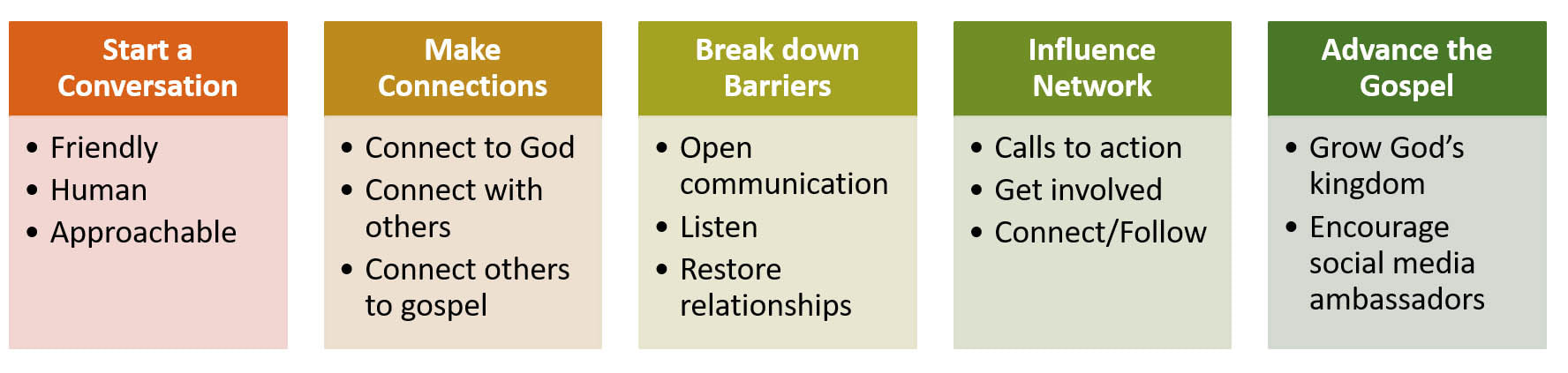
  1. THINK LIKE A SEEKER  

    The first thing a church needs when implementing Digital Discipleship principles is empathy.  Yes, empathy!  We need to begin to think like a person looking for a church community when setting up our websites and social media accounts. 

    Arm yourself with empathy for a seeker or a person looking to find God.  What questions would you have about church? What would encourage you to attend a church or to reach out to a Christian to understand Jesus better? What might you see that would give you a boost of encouragement to push through a hard time?

    Show your online visitors what life might look like if they were a part of your community.  Give them a glimpse of the events, the spiritual life and the friends they might make.  Show them how they can have their questions answered.

    While it’s very important to put thoughtful consideration into your website and social media design, remember social media isn’t a science and effective website design can require iterations.  Knowing that you can test, change and update can relieve a bit of the pressure of always getting it right the first time.

    Understand why you are posting in the first place. Periodically assess whether you’re getting the results you need from your social media and web presence. Find ways to adjust or adapt to the needs of your church and to the people you are trying to reach through your site and social media accounts.

  2. VALUE THE TALENTS OF THE CREATIVES AND TECH SAVVY AMONG YOU

    There isn’t always space in the church for creatives and the tech savvy to place their talents on the altar in service to God.  Weaving Digital Discipleship principles into the fabric of your church’s Discipleship Plan can provide space for more people to feel engaged around the idea that the church values their time and talents.

    Providing a space of recognition for the gifts of creatives and the tech savvy is an essential part of Digital Discipleship. Regard their contribution to the mission of the church as highly as you would the musicians, Sabbath School teachers or youth leaders.

  3. IDENTIFY THE SPECIFIC NEEDS OF THE PEOPLE YOU’RE TRYING TO REACH

    Never before have marketing messages been able to be so targeted as they are today.  In the digital space, ads can be aimed at specific groups based on demographics and behaviors.  For this reason, it’s best to decide who you are trying to reach.  Review some of the ministries your church is running.  See if there’s an opportunity to bolster their efforts by implementing a digital strategy.

  4. FIND A WAY TO MEET THE NEEDS OF YOUR COMMUNITY IN THE DIGITAL SPACE, AROUND A DIGITAL NEED OR BY UTILIZING A DIGITAL TOOL

    There is discussion, even within the Digital Discipleship ministry, about how “Digital Discipleship” fits within “Discipleship”.  Many models have been created and put forward for church members and leaders to study and understand.  One in particular is based on Jesus’ story of the Sower and the Seeds from Mark 4.  These models are helpful in explaining the process of discipleship so some may wonder if Digital Discipleship is similarly proposing a new model of discipleship that exists exclusively in the digital space.

    Digital Discipleship’s aim is to provide a gentle nudge (or a strong nudge if necessary) to the church to meet the needs of people within our community in the digital space, around a digital need or by utilizing a digital tool.
    ​
  5. PROVIDING DISCIPLESHIP OPPORTUNITIES IN THE ONLINE SPACE

    Local churches have a variety of opportunities to help their members grow in discipleship in the digital space.  Ironically, while leading with spiritual events and worship services is not the natural progression of discipleship — even in the traditional discipleship models — it’s often the starting point of our interactions with people in the digital space.  We often begin our online interactions by “sowing the seeds” through live-streams of church services and advertising evangelistic programs, which isn’t necessarily the first natural step to introduce someone to Jesus.

    Even though it’s not the recommended starting point, it is crucial.  There are many people who are in need of Jesus who spend significant amounts of time in the digital space.  As expressed at the Digital Discipleship Conference by Pr. Sam Neves, Associate Director of Communications from the General Conference, online relationships are not virtual relationships they are real relationships.  There are real people behind the computer screens.

    There are many people who are unwilling or unable to enter a church building.  Many members of our local churches have stopped attending church but may be willing to anonymously watch a service online.  Many parents, previously involved in the church, are distracted on Sabbath morning by attending to the needs of their children.  Others have hearts that are ready to listen to spiritual messages but are intimidated by entering a church building.  By fostering relationships online, some who were unwilling to attend may return, others who were disengaged may be encouraged to return to the church and some may find spiritual renewal.

    Keeping this in mind, there are opportunities to share spiritual content online outside of the traditional church hour.  These might include online small groups and online prayer sessions.  There are also opportunities for webinars and online evangelistic series.
    ​
    Not all online relationships must remain in the digital space.  There may be opportunity for building relationships with people online that encourage and attract them to attend your church.  There are many things that need to happen for a person to trust you with their Saturday morning in a church building.  Digital Discipleship can play a role in familiarizing people with your church and encouraging them to attend.

  6. PROVIDING MEMBERS WITH PERSONAL MINISTRY OPPORTUNITIES​

    There is an additional opportunity for local churches within Digital Discipleship.  Recognizing that not all members are gifted in the areas of creativity or technology, there is room for the non-techie, semi-creative to be involved in Digital Discipleship.

    Pastors are often laden with the responsibility of maintaining the functioning of their local churches while also evangelizing their communities.  This skewed view reduces the responsibility for church members to grow in discipleship.

    Creators, Distributors and Engagers

    Employing Digital Discipleship strategies in the digital space, as a church, can provide church members with the tools and know-how to share and disciple within their online communities.

    There is a model in Digital Discipleship of content creators, content distributors and content engagers.  Collectively, they create content to share a message, distribute the content to their networks and position themselves to have conversations around that content.
    ​
    Local churches are well positioned to adopt this model among a group of its members who wish to use their social media platforms to intentionally share Jesus online.

If your interest has been piqued and you’re curious about introducing Digital Discipleship principles in your local church, consider the following steps:

  1. Exercise empathy for the people who will be engaging with your social media accounts and your website. What questions might they have that you can answer?  Have you given them a glimpse at what life might be like if they were to join your community?
  2. Value the creatives and those gifted with the ability to understand technology. Regard their contribution to the mission of the church as highly as you would the musicians, Sabbath School teachers or youth leaders.  This will affirm the area of giftedness God has given them and will engage them in the church’s mission.
  3. Identify the specific needs of the people you’re trying to reach. Today’s digital landscape is highly segmented, and it’s much easier to target the people you’re trying to reach in the geographic locations where you want to connect with them.  Having a clear picture of who you’re talking to can be very effective.
  4. Find a way to meet the needs of people within your community in the digital space, around a digital need or by utilizing a digital tool. Digital Discipleship does not limit you to the digital space.  It provides you with another avenue to reach people, with additional tools and with additional needs to meet.  How can these increased opportunities be useful in allowing you to reach the people you’re trying to reach?
  5. Provide discipleship opportunities in the online space. After you’ve met people’s needs, be prepared to feed them spiritually.  This may mean a series of articles or videos or a livestream of your church service or Bible study.  Whatever it may be, be prepared to talk about the life-changing effect of Jesus in the lives of your online visitors.  Have a plan for how you can best progress to that point in the conversation.
  6. Provide personal ministry opportunities. Digital Discipleship provides a natural personal ministry opportunity for the creatives and tech savvy.  However, it also creates a space for church members who are less digitally inclined.  If they operate in the digital space, they may be able to participate in the model of content creators, engagers and distributors.

Please let us know if you are implementing digital discipleship models in your church or ministry. We would love for you to share you experience and what you've learned.  Comment below! 

Click here to read the full, original article. Re-posted with permission from digitaldisciples.info. 

Related Articles:

  • Strategic Branding
  • Tips for your Member Care Strategy
  • Become an Online Missionary!
  • ​Digital Missionaries Needed

Strategic Branding: Reveal the Most Complete Picture of Your Ministry

1/23/2018


Jamie Schneider Domm

Digital Strategist for the North American Division. ​

Select quotes and graphics used with permission from Heidi Baumgartner, Communications Director for the Washington Conference

Picture
The stakes of our gospel calling are too high; your church, conference, or ministry can no longer go without a digital  brand strategy.  It is imperative that we become just as effective as secular organizations at using digital media for communication and community building.
Strategic planning is simply the process of being intentional and thoughtful with your digital communications.
This process begins with one question: How do you want to be known? This is your brand.
Branding is the process of revealing the most complete picture of an organization to its audience through perception, experience, and essence. Brands are communicated, not just created. A brand is based entirely on a customer’s experience. (Heidi Baumgartner)
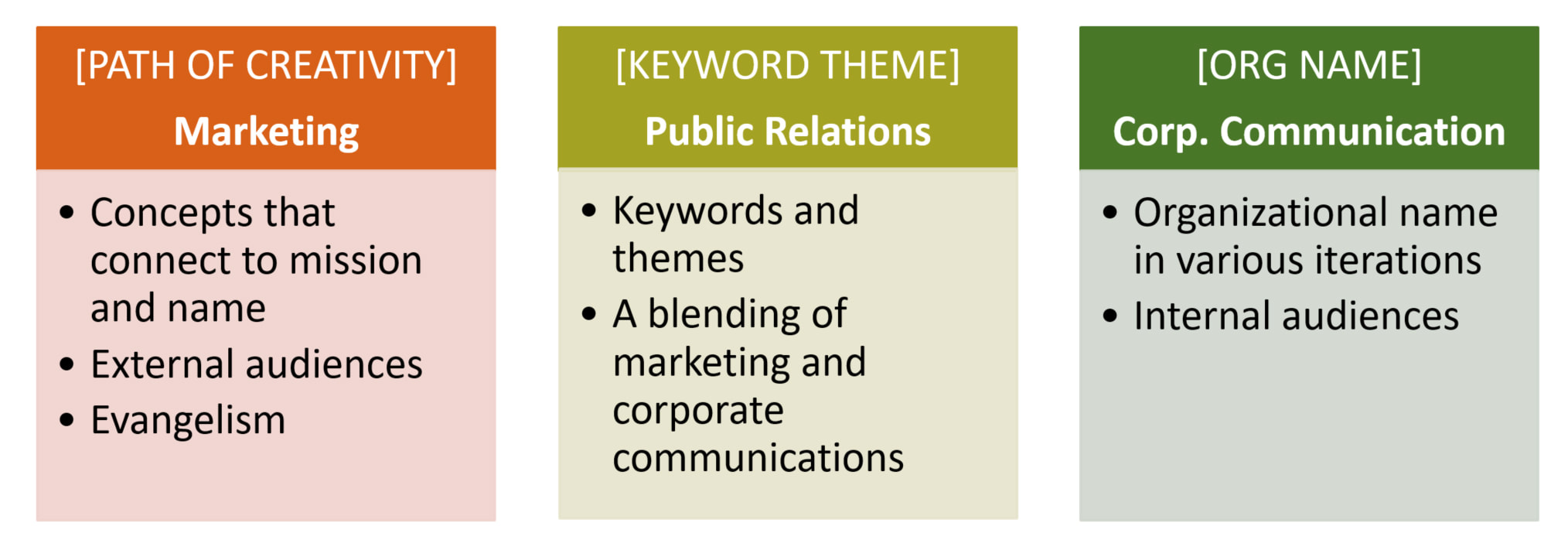
Components of your brand strategy should cover three areas: marketing, public relations, and corporate communication. Think of marketing as evangelism [OUTREACH] and corporate communications as internal or member focused [INREACH].

What can your church or ministry become known and recognized for? What is unique about what your organization has to offer the community? 
​
How do you want to be known categories.

Your branding should:
  • promote awareness
  • foster emotional connectiveness
  • communicate your mission and values [brand story]
  • encourage brand ambassadors
  • provide strategic direction to your team and set clear goals/objectives [mission/vision]
  • shape expectations for those you serve [brand promise]
 
Your brand strategy and digital strategy work together, and are part of an overarching grand
communications strategy that includes traditional means of outreach and experience.
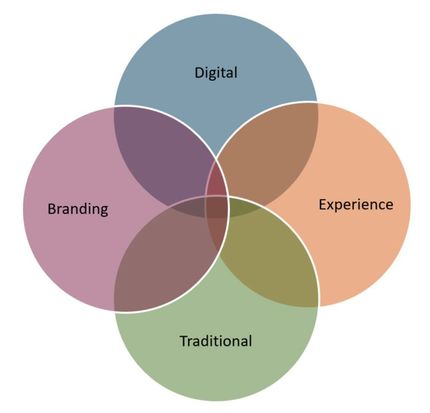
Grand Communications Strategy
Redeveloping your brand and/or your strategy takes a lot of behind-the-scenes homework. Involve people in your team throughout the process so they could share in ownership. This is especially important for choosing a handle or name for your social media profiles.

Brand Basics: ​

Brand: represented by its logo, its color, its type, its images, its designs, its tone of voice, its customer service

Brand Strategy: defines the message and how to say it

Brand guidelines: a system of managing the brand visually
 
The biggest problem I see with ministries using social media is that they have no clear objectives. You must determine your purpose and shape your online communications and brand accordingly.
​

Conduct a thorough branding audit. This process helps you to evaluate your communication and can help direct your rebranding. Define your communication purpose(s): for example, to advance the gospel and influence your community.

Achieving your ultimate purpose(s) will take time. Develop an on-going approach
​like the following. 

Picture
​Next develop your identity across all platforms and channels as part of your overall brand. Social media does not work in a silo; it should be integrated in your broader communications, both digital and print. 
Picture
Helpful resource: identity.adventist.org


Establish Branding Consistency

Make sure all your social media profiles look consistent and use the same name.
  • Reserve your name on all platforms.
  • Use a consistent name (15 characters or less; short/simple; stands test of time; no numbers, symbols, or punctuation).
  • Use the same profile photo & a consistent design look.
  • Use the same headline, blurb, or bio.
  • Develop a consistent voice/tone.
  • Clearly articulate what you do and offer through your mission, brand promise, and brand story.
There should not be a disconnect between how a person is nurtured in the pews and how they are treated online, or vice-versa.
Social media is an extension of your church brand and voice, shared with an online audience. Your brand is how your church is perceived. How we feel about a brand ultimately stems from our experiences with it. Put yourself in the shoes of a person experiencing your brand, and view your ministry through an outsider’s perspective. Evaluate their experience objectively and make changes based on your communication objectives. Develop a clear brand promise (expectation of what it's like to experience your brand or what your organization has to offer) and make sure all aspects of your organization deliver on that promise.  

Strong digital brands create connection and take a comprehensive approach to the member experience. Treat your members online as if you’re talking with them face-to-face. Their online interactions with you should make them want to experience your faith/mission in person. Then, when they come to an in-person experience, it should be a continuation of the positive relationship you’ve built with them online. This applies also in reverse. Have guidelines for every part of an audience member’s journey, including in-person, on-site interactions. Remember every experience–physical or digital–speaks to your brand.

How your online followers and community perceive your ministry influences their perception of, not only the Adventist church corporately, but God, even if you haven’t put any effort into creating or managing your brand. In the absence of your story, people will fill in the blanks themselves. Your digital voice may be the only opportunity your followers have to see Christ’s love demonstrated in their life.

Utilize all your possible brand touch-points to tell one consistent story. 

Picture


​People search online for answers to their problems, what better place for the church to engage them?

But first, we must have a clear understanding of who we are and be able to clearly demonstrate our mission, vision, and value. Create a brand that your target audience can recognize and connect with in a meaningful and positive way.
​
Having a strong brand and digital communications strategy won’t cost a lot of money but will involve a lot of time. Consider this an opportunity to build a team of digital disciples and brand ambassadors within your church or ministry. These people will become the human face and voice of your brand 24/7. Investing in their talent will keep them invested in the church long-term. 

Related articles:

  • Creating Digital Disciples in Your Church Community
  • Tips for your Member Care Strategy
  • Become an Online Missionary!
  • ​Digital Missionaries Needed

Become an Online Missionary!

1/23/2018


Center for Online Evangelism

The Center for Online Evangelism is a missionary project devoted to developing online mission stations.

Picture

​People are Googling for God.

Each year there are millions of Google searches for answers to questions like:
“Is God real?”
​

“What happens when we die?”

“How do I know I’m saved?”

“Why is there so much suffering in the world?”

Additionally, many people are hurting, entertaining suicidal thoughts, or feel there is no hope for their situation. They turn to the internet for companionship, understanding, information, anonymity, and more. It’s easier for them to pour their hearts out on Google, Reddit or a topical forum than it is to come to a friend, neighbor, co-worker or family member.

​This great need yields an opportunity for you to share the hope found in Christ.

No matter your skill set, interests, or socio-economic status, you can be a beacon for the hope only God can give. Being an online missionary simply means you dedicate time online to help people learn more about Jesus Christ and invite them to follow Him.

With the increase of social media platforms, websites, and the popularity of video sharing sites, there are countless types of media you can use to connect with someone, build a relationship, care for their needs, and point them to a saving relationship with the Lord.

There are so many ways to do this. It could simply be what you share on your Facebook page, blog, YouTube channel, Instagram feed…wherever you spend your time and have nurtured a circle of friends or followers. You can share articles, quotes, scripture, or begin discussions of your own. You can even use proven evangelistic strategies to lead others to Bible studies, whether at your local church, or online in a private Facebook group. The possibilities are as limitless as our God!
​
There are many online missionaries and digital disciples out there already. But as you know, the harvest is so plentiful that more workers are always needed.
Anyone who is a follower of Jesus is called to be a disciple and we were all given the commission to “go…and make disciples of all nations” (Matt. 28:19, NKJV). Now the nations are literally at our fingertips! We can ‘travel’ to Asia to tell someone of Jesus and at the same time share Bible truth with someone living on the West coast of the United States—while sitting at home, thousands of miles away from those we are interacting with.
These days, anything you can think of can be accessed online. Why not make Jesus more accessible?
​

If you are looking forward to the soon return of Christ and if you have access to the internet, you can be an online missionary.

​Post it.  Text it.  Tweet it.  Pin It.  Share it.  Vlog it.

What is ‘It’? The Good News that Jesus died to save us from our sins and is coming soon to take us home!

Not sure how to start? The Center for Online Evangelism is dedicated to providing you with resources  to help you as an online missionary. Click here for more>>

Reposted with permission from centerforonlineevangelism.org. 
<<Previous
Forward>>

    Archives

    August 2020
    July 2020
    June 2020
    April 2020
    March 2020
    February 2020
    December 2019
    November 2019
    August 2019
    July 2019
    June 2019
    May 2019
    April 2019
    March 2019
    February 2019
    January 2019
    December 2018
    November 2018
    October 2018
    September 2018
    July 2018
    June 2018
    May 2018
    April 2018
    March 2018
    February 2018
    January 2018
    December 2017
    November 2017
    October 2017
    September 2017
    July 2017
    June 2017
    May 2017
    April 2017
    March 2017
    February 2017
    January 2017
    December 2016
    November 2016
    October 2016

    Categories

    All
    A Allan Martin
    Adam Fenner
    Angeline Brauer
    Big Data
    Center For Online Evangelism
    Chris Matts
    Culture
    Data Science
    Data Tracking
    David Mwansa
    Design
    Digital Discipleship
    Digital Pew
    Digital Strategies Intern
    Dustin Comm
    Email Communications
    Erica Jones
    Event Registration
    Faith-hoyt
    Fundraising
    General
    Harvey Alférez
    Heidi Baumgartner
    James Gigante
    Jamie Schneider
    Jason Alexis
    Justin Khoe
    Kaleb Eisele
    Kimberly Luste Maran
    Marketing
    Member Care
    Michelle Diedrich
    Nick Wolfer
    Online Church
    Paul Hopkins
    Philanthropy
    Rachel Lemons Aitken
    Reaching Young Adults
    Rodney Brady
    SEO
    Social Media
    Stewardship
    Text Evangelism
    Video
    Volunteering
    Website
    Working From Home

    RSS Feed

Location

Hiding within those mounds of data is knowledge that could change the life of a patient, or change the world.

Atul Butte, Researcher
University of California, San Francisco

Contact Us

    Subscribe Today!

    We will use this email to send you updates on social media and big data initiatives.
Submit
Legal Notice   l   Privacy Policy
  • Home
    • Big Data
    • Social Media
  • BLOG
  • RESOURCES
    • RESOURCE MENU >
      • ADVENTIST IDENTITY GUIDELINES
      • BIG DATA RESOURCES
      • BRANDING, IMAGE & DESIGN RESOURCES
      • CHURCH/MINISTRY SPECIFIC RESOURCES
      • COPYRIGHT & TRADEMARK BASICS
      • COURSES
      • EMAIL RESOURCES
      • GUIDANCE FOR HIRING SOCIAL MEDIA POSITIONS
      • PODCASTS
      • REPORTS & CASE STUDIES
      • SOCIAL MEDIA RESOURCES
      • (SOCIAL) VIDEO RESOURCES >
        • HOW TO START A VIDEO MINISTRY
      • TEXTING 4 CHURCHES
      • TRACKING & ANALTYICS
      • WATCH VIDEOS & TUTORIALS
      • WEBSITE TIPS
    • SOCIAL MEDIA GUIDELINES
  • SEO
    • SEO TERMS
  • Digital Discipleship & Evangelism
  • COVID-19 RESOURCES
  • eNEWSLETTER