Jamie Jean Schneider DommDigital Strategist for the North American Division  I am often asked if digital communications can really make a global impact when only around 42% (as of June 2019) of the world’s population is on social media. This question always reminds me of one of my first campaigns for the Church. In the summer of 2016, I worked with “Your Best Pathway to Health” to help create community awareness for the free mega-health clinic that was coming to Beckley, WV, the heart of Appalachia. A quick search in Facebook Ads manager revealed that around 200K people within 50 miles of the convention center where the clinic would take place, were on Facebook. With a small budget of $200, I started a community awareness ad campaign targeted at those living within driving distance of Beckley. This digital effort was part of a larger multi-channel campaign that included newspaper ads, 30K+ hand-out flyers, and other traditional media. Can We Really Reach Those People?It is said that “familiarity breeds contempt” or, at least, presumptuous behavior. Soon after launching the campaign, I received a call from a long-time friend who felt very strongly that I was out of line to use Church funds for this digital campaign, and that I was out of touch with the realities of this community. After all, “this was Appalachia, and those people don’t even have running water and electricity.” After two hours of conversation, I still call her friend, because this was a teaching and learning moment. I had an opportunity to share the potential this technology offers for our mission, as well as gain a better understanding of the cultural paradigm I was up against (in terms of encouraging the Church to embrace digital strategies and the perceptions that may result). What she didn’t know was that I made a decision based on data and not assumptions about the “least of these.” In fact, she didn’t know that I had been raised in the same economic class she felt I was so disconnected from. I asked her one simple question: do you know someone who is not on social media? She said yes. I followed up with something like, “If you saw an online advertisement about free medical treatment with no strings attached, and you knew they needed help, would you tell them?” Without hesitation, she responded, “Of course!” One question and response summarized my strategy. What I had done was make a strategic decision to activate the sharing power of the 200K people who were online and, most likely, connected to others in the community who were not on social media. It’s human nature to share a good thing when we see it, especially with those we care about who need the services offered. According to an extensive study conducted by the New York Times, 94% of people share content online because “they feel the content will improve the lives” of others. This act of sharing goes beyond the digital space. “Then, leaving her water jar, the woman went back to the town and said to the people, ‘Come, see a man who told me everything I ever did. Could this be the Messiah?’ They came out of the town and made their way toward him” (John 4:28-30, New International Version). However, my ten years of digital marketing experience was entirely secular. I had never done an advertising campaign for a church project before, and consequently prayed a lot in the weeks leading up to the clinic. When the event began I was overjoyed at the testimonies of people who said their family member, friend, or neighbor saw an ad online and told them to come. According to the exit surveys, social media outperformed all the traditional advertising, and was second only to referral by friend or family member. Based on the anecdotal testimonies, word-of-mouth (friend/family) was also largely driven by the social media campaign. Click here to learn more about this case study in community awareness. Social media is the modern School of Tyrannus, a place where the ancient Ephesians gathered to engage with new ideas, pass the time, share thoughts, and participate in discussions. Paul spoke at the School of Tyrannus in Greece for two years (Acts 19:8-9), essentially getting the gospel to go viral in his day. (A podcast about Paul’s influence at the School of Tyrannus by Dee Casper, Brand Evangelist, ARTV, can be found HERE). “This took place for two years, so that all who lived in Asia heard the word of the Lord, both Jews and Greeks” (Acts 19:10, New American Standard Bible) Paul stayed in one place, and yet his teachings spread. How did this happen?Ephesus was an important port for trade and commerce (like the internet), attracting people from all over the Roman Empire. People would come and hear what he had to say, go home, and tell others what they’d learned. In today’s terminology, they hit “Like” and “Share” on social media, and their friends and family were exposed to Paul’s teachings of the gospel. Social media has the potential to do this on a much larger scale. By reaching the connected, we can reach the unreachable. In other words, if approximately 42% of the world’s population is on social media, it’s highly likely that they know the other 58% of the world or know someone who is connected to someone who is not on social media. You get the idea. What starts in the digital space, isn’t confined to the digital space. We must put our assumptions about those people aside (whoever those people might be), and work with who we can reach. Evangelism experts tell me that the best way to reach a community or people group is to empower a member of that community. Your average person is just as likely to have moved several times, as to have lived and died in the community they were born, surrounded by a homogeneous collective of people who share the same culture and life experiences. The "simple life" has given way to something more complicated, perhaps messy. Even for those who never change their geographical location, they are globally connected to people through social media in ways that were unheard of just twenty years ago. What this means is that we now live in a world of intersecting cultures and communities. The city of Ephesus experience is now reflected in every major city in the world and online. I, myself, am a mid-western transplant to the D.C. metropolitan area. There is still no cellphone reception in my home town. My parents access the internet and phone through satellite. Until recently, our roads were unpaved, and my family was on well water. I go home once or twice a year and call my parents regularly (when the satellite phone is working). I had never heard of Adventism until I went to college; now my parents are closely connected to two Adventists (me and my husband). During our conversations and interactions, I share my experiences and new ideas. While my home town is not as remote as some other countries or communities that still exist in the world, the concept is the same. We can reach people online who have migrated to the digitally connected parts of the world. These people probably maintain ties to their home communities in some way, and since they are from that community, they are in the best position to share the gospel within the cultural norms, language, and expectations of those communities. When they visit their friends and family, they can share the gospel just like the ancient citizens of the Roman empire did back in the first century. This is how we can obtain global impact through digital communications. It’s the same strategy that Paul leveraged, but scaled up by modern technology. According to Pew Research, the most racially diverse Christian denomination in North America is the Seventh-day Adventist Church. We are truly a global movement that has yet to realize the full potential of modern technologies. Our challenge is not to just reach those who are online, but to also activate the online and offline sharing power of those we connect with. The membership of the Adventist Church is perfectly positioned to reach the around the world to every nation, tribe, people, and tongue with the gospel message. And for those isolated communities with, assumed, no access to the outside world, give the Holy Spirit a little credit for being able to carry the message the rest of the way. If the message went global in Paul’s day without the help of modern technology, let’s not assume limitations on the Holy Spirit in our day. We aren’t expected to accomplish this mission alone, but we are called to “Go into all the world and preach the gospel to all creation” (Mark 16:15, NIV). The world now includes the digital space. We need to dream bigger when doing God's work. Can you imagine what would happen if each of us committed to sharing the gospel online for two years? And remember, it's not like we have to physically go somewhere, or even leave the couch for that matter! Who knows where God will lead us when we step out in faith.
5 Comments
Jamie Jean Schneider DommDigital Strategist for the North American Division.  Feel free to adjust to your community needs. Depending on your audience, you may want to consider a more casual tone. We’re excited that you have decided to join our online small group/discussion forum. To make this a positive and safe environment for all, please consider the following guidelines and recommendations that will help us get the most out of our shared experience.
Consequences: Appropriate action will be taken when these guidelines are violated. A warning may be given but is not guaranteed; in severe cases, violations can mean removal from the group. Community members should voice concerns and report behavior that violates the guidelines to the administrator via private message. The administrator reserves the right to remove inappropriate comments or content without notice. Agreement: By joining this community, you are considered to be in agreement with the terms and conditions listed above. As the mediator/leader for this online group, I commit to:
For more social media policies and guidelines, click here. 
Felecia DatusThe Center for Online Evangelism is a missionary project devoted to developing online mission stations.  We continue our overview of digital evangelism. If you haven’t already, read part one about the keywords in online evangelism. Also, read part two where we cover the three main reasons why digital evangelism is very important. In part three, we review the role that each person and institution play in advancing the mission of online evangelism. The Role of the Holy SpiritNo doubt, digital evangelism (or digital discipleship) calls for the development of many skills such as writing, editing, design, and creativity. Though certain aptitudes help tremendously with creating content for people online, one may master these skills yet lack power. We must never underestimate the need for the Holy Spirit. Without the Holy Spirit, the biggest budget and most detailed strategy will not work in saving souls. A video may be perfectly edited and a blog post may be meticulously written, but without divine power, souls cannot be won. Our skills, experience, or ads will not convert hearts. But Jesus promised to give power to His workers when they are filled with the Holy Spirit (Acts 1:8). Digital Missionaries must spend more time in prayer asking God for power to bring in a harvest. The Word of God must be constantly consumed. The content we create must flow from the Truth of His Word. Allow the Holy Spirit to play His part. The Role of Church Pastors and LeadersIf our ministers realized how soon the inhabitants of the world are to be arraigned before the judgment seat of God, to answer for the deeds done in the body, how earnestly they would work together with God to present the truth! – Letter 43, 1902. Leaders must, with all diligence, encourage their members to take up their own portion of the Gospel work and do it with the power provided through the Holy Spirit. If our leaders and pastors show an interest in the mission work being done online, their congregations will also follow suit. Pastors, you could reach thousands more if you incorporated digital evangelism into your ministry. Record your sermons and make them available online. Encourage your department heads to create content that can be published on the web. Ensure that your communication department receives the budget to properly advertise the church’s services and events online. Create online evangelism training opportunities for members. Make certain that your church has an effective online presence. Your church does not need to be active on all platforms. Choose one and effectively invest resources into that platform until the Spirit opens the way for you to expand your online reach. By so doing, a church of 100 can grow to include thousands of online members who may not have access to a local Adventist church. Use every opportunity to motivate your church members to use their devices for a greater purpose. If training is needed, there are workshops, webinars, and online resources available to churches and leaders. The Role of Educational InstitutionsTrue education is missionary training. Every son and daughter of God is called to be a missionary; we are called to the service of God and our fellow men; and to fit us for this service should be the object of our education. The work of digital evangelism is specially crafted for today’s youth. Those who oversee their education can do a great deal to ensure that students are properly equipped to serve God online. Remind students of the greater call on their lives to be missionaries in their career fields. Teach them to look beyond the temporal returns of a salary and promotion, toward a more glorious reward; the saving of souls. Instructors can wisely use their position to admonish students to be Godly influencers in their online circles. Adventist schools have an opportunity like no other institution to help students untangle themselves from time-wasting habits and engage in intentional digital discipleship. The Role of ParentsParents are putting powerful tools in the hands of toddlers and children. Tablets and iPhones are fast becoming the gift of choice for teens. This generation does not know life without the internet, social media, iPads, and cellphones. If youth are able to have their own device, they are also able to do online evangelism according to their ability. Parents and guardians can inspire their children to use their gadgets to positively influence their friends. Instead of discouraging the use of social media, show your young ones how a noble use of their online powers can bring joy to their heavenly Father. In an age of cyberbullying and suicide among teens, Adventist youth trained in online evangelism can help bring hope to other young people online. The Responsibility of Every DiscipleThe disciples were to teach what Christ had taught. That which He had spoken, not only in person, but through all the prophets and teachers of the Old Testament, is here included. - The Desire of Ages, p. 826. Church members are disciples of Jesus. Disciples are continuously on the move, following Christ and calling other people to live as He did. They are actively engaged in or supporting mission work. The online world is languishing because we are not doing enough individually as members and collectively as a church. You and I will be held responsible for not using every means necessary to share the Gospel with our relatives, neighbors, and friends. Members must move on from the erroneous belief that evangelism is an event that is organized by specific individuals in the church. Evangelism is like a living portrait; every member of the local church must intentionally work in his colors so that each church can show a beautiful depiction of the Gospel. As a member of the body of Christ, the Lord blessed you with an exceptionally precious truth for this time. With a sense of urgency, make decided steps today to be more diligent in online work. Read part 4, where we explore practical steps you can take today to be a part of online evangelism. Previous posts in this series:
Breaking Down Online Evangelism (Part 2) - Why Digital Evangelism Is Needed and Why Are We Behind?4/16/2019 Felecia DatusThe Center for Online Evangelism is a missionary project devoted to developing online mission stations.  Why is Online Evangelism Important?In part 1 of the series, we covered the basics of online evangelism – what it is and some common key terms. Now, we’re reviewing three main reasons why this branch of evangelism is critical, especially in the digital era. Reason 1: We Need to Change the Online Story.You can probably think of someone who researches Seventh-day Adventists online, only to conclude that we are a “cult” and follow the teachings of a “false prophet” more than the teaching of the Bible. Why do so many people believe this? Because of negative content widely available on the internet. 60% of visitors stop attending evangelistic series because they, or someone they know, came across websites or videos that painted Adventism in a different light. Online evangelism helps ensure that when people search for us online, they find credible websites about our church, beliefs, educational institutions, hospitals, and ministries. Reason 2: We Need to Save More Souls.So many people are living and dying without hope in Jesus. Think of your relatives, friends, neighbors, co-workers, or classmates; have they all heard the Gospel? What about the people at your local grocery store or bank; are they saved? There are many of them who have yet to have their sins forgiven by Christ. At the Second Coming, only those who have accepted Jesus as their Savior will be saved. Homeowners are no longer opening their doors to canvassers as they used to and handbill invitations to attend church seem to go unnoticed. However, a video on YouTube or a blog post might be the key to pointing a friend or relative to Jesus. Online evangelism increases the likelihood of them coming across an opportunity to have a personal relationship with Jesus, thereby more people can be saved. Reason 3: We Need to Be Relevant.While the Gospel message never changes, how we deliver that message will change. Today, no one would advocate traveling on horseback from state to state to preach the Gospel. This method was most effective during an era where a messenger traveled as fast as the fastest horse. Today, cars, trains, and planes have provided more effective ways to travel. If we wish to remain relevant and effective in carrying out the Great Commission, we must learn how to use the platforms that will get us in touch with the masses. Today’s evangelistic efforts must be appropriate to the current time, period, and circumstances. Why Are We So Far Behind?Aesop’s fable about the tortoise and hare gives an idea of why we are lagging behind when it comes to using the most revolutionary methods to share the Gospel. It seems we, as a church, became very comfortable with the progress we were making and mistakenly assumed that we could slow down. But in resting, we became lukewarm, not only in our own spiritual growth but in our efforts to win souls. Also, we hesitated to accept emerging technology and failed to see how these new digital means of communication could be used for a higher, nobler purpose. We are far behind in online evangelism because we are constantly shifting the mission responsibility to someone else instead of recognizing our own personal role to help finish the work. We’re playing Holy Volleyball; instead of dropping the ball, we’re getting worked up tossing it on the other side. Members toss the ball to leaders, leaders toss it to workers, workers toss it back to members, and so it continues. But all hope is not lost. Online Evangelism Is Growing.As Seventh-day Adventists begin to see the significance of online evangelism, members are jumping at opportunities to become online missionaries. Today, digital disciples like Greg Serada, Mark Fox, Justin Khoe, and Dustin Pestlin are collectively accumulating millions of views on YouTubers. Jasper Ivan Iturriaga impacts the online world through stunning photography. Taj Pacleb and Kenisha Simms produce beautiful devotional videos. Santiago Nuñez creates inspiring graphics, Aleksandar Popovski uses his creativity, Kaleb Eisele shares our collective stories and builds community, Alistair Huong manages a hub for online sermons, and the Aus Table Talk team and other podcasters address relevant issues through their podcast. These are only a few among many others who are using their talents in the digital space for evangelism. And God’s grace was so powerfully at work in them all (Acts 4:33 NIV). The Clarion CallNow, there is a clarion call to every member, worker, and leader to either be directly involved in online evangelism or to support digital missionaries. We must stay up to date with the times so that we can utilize all avenues possible to preach the Gospel and Three Angels Message to the ends of the world. We can no longer afford to remain on the sidelines of evangelism. In part three, we'll explore the role each person can play in online evangelism. Click here for more resources on Digital Evangelism and Discipleship. Previous post in this series:
Felecia DatusThe Center for Online Evangelism is a missionary project devoted to developing online mission stations.  IntroductionWe’re one day closer to the return of Jesus Christ! Now as awe-inspiring as that is, it also evokes a lot of thought about how many people have yet to know Him personally. Online evangelism is one method that is proving to be very effective in pointing more people to the Savior. This series of articles will explore what online evangelism is, why it’s important and how you can get involved. More ResourcesThere are other key players to help us understand online missions. Check out this series by Jamie Domm from the North American Division and this descriptive blog post by Rachel Lemons-Aitkens from the Seventh-day Adventist Church in Australia. Also, we made this series available for download. Scroll down to the end and download the entire presentation for FREE! Now let’s jump right in! What is Online Evangelism?Online evangelism is the systematic and intentional use of internet platforms to spread the Gospel to the online population. The goal is to introduce people to Christ and then connect them to a church family. You may see the terms digital evangelism and online evangelism being used interchangeably. Both cover various evangelism strategies that require the use of the internet, cell phones, laptops, video cameras, and other modern technologies. Click here to see how these and other digital missionary terms are defined. Traditional Methods Not to Be ReplacedIt is important to note, digital evangelism should be incorporated with traditional forms of evangelism – it does not replace traditional methods such as canvassing, tent meetings, or distribution of tracts. Gospel workers should survey their field and use the methods that would be most effective. Is Digital Discipleship Different?Another term you may come across is digital discipleship. It is “a movement to make disciples and inspire people to grow in discipleship.” Rachel Lemons-Aitkens explains three categories of digital disciples; content creators, content distributors, and content engagers. So whether you say online evangelism, digital evangelism, or digital discipleship, all of the terms involves working with people online (directly or indirectly) to propel them toward a strong relationship with Jesus Christ and bring them into a community of faith. Key Terms in Online EvangelismDigital Marketing Digital Marketing incorporates strategies such as content marketing, search engine optimization (SEO), online ads, social media strategies, and other online methods to help churches and ministries rank higher in search results. That way, thousands more are blessed. It is imperative to understand that online mission work must incorporate some form of digital marketing. For example, you may have an online Bible study group (your mission work) but you can get more people to join the study by running Facebook ads, creating social media graphics, or optimizing your website. Content Marketing Content marketing refers to the production and distribution of online material that elicits interest in church or ministry services, rather than direct publicizing and promotion. Materials can be blogs, videos, podcasts, or graphics. Search Engine Optimization Proper SEO goes a long way to ensure that websites showcasing our churches and other institutions are found by online seekers. Without SEO, quality information about Adventists remains hidden away online. Learn more and download our SEO Guidebook. Online Advertising Online ads (e.g. Facebook or Google ads) reach far more people than any other form of advertising. Churches can launch Facebook ad campaigns to promote evangelistic campaigns, community events, or any other program being hosted by the church. Ministries can recruit more supporters and get more donors through digital ads. The truth will be made so prominent that he who runs may read. Means will be devised to reach hearts. Some of the methods used in this work will be different from the methods used in the work in the past; but let no one, because of this, block the way by criticism.– Review and Herald, Sept. 30, 1902. In part two, we will further explore why digital evangelism is desperately needed. Click here for more resources on Digital Evangelism and Discipleship.
Jamie Jean Schneider DommDigital Strategist for the North American Division  Digital discipleship and evangelism are ways to activate the social influence of a church membership, building bridges to the local community, developing a meaningful understanding of felt needs, and determining relevant ways to serve the community (both in and outside the church). It's also a strategy to scale up friendship evangelism and empower individuals to be actively involved in the larger goals and mission of your church. It’s a way to reach seekers, especially young seekers.As of 2017, the average person spends around two hours a day on social media, which adds up to 5 years and 4 months spent over a lifetime. When social media was ranked against other daily activities, it revealed that the average person will spend almost three times as much time socializing on social media as opposed to socializing in person. The average adult spends most of their waking hours behind a screen for work, entertainment, education, and socializing. 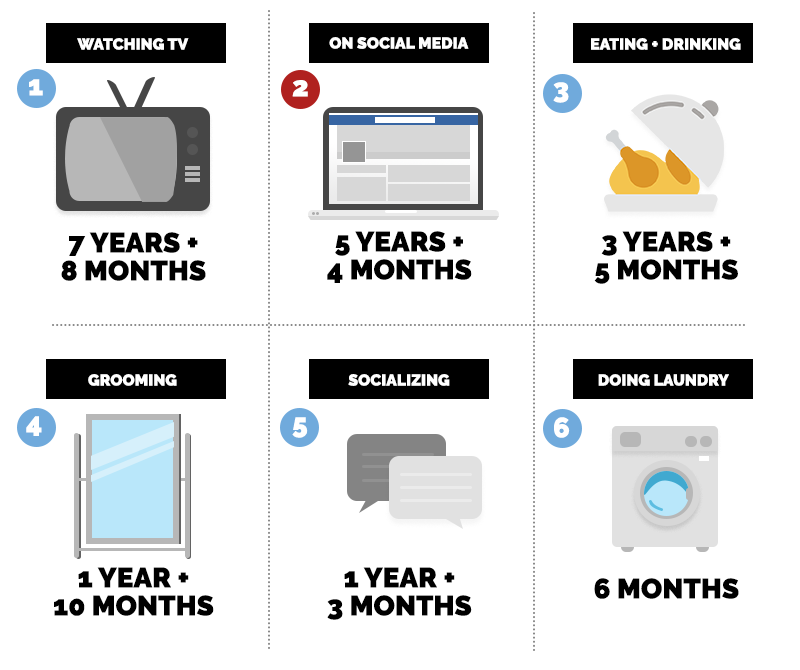 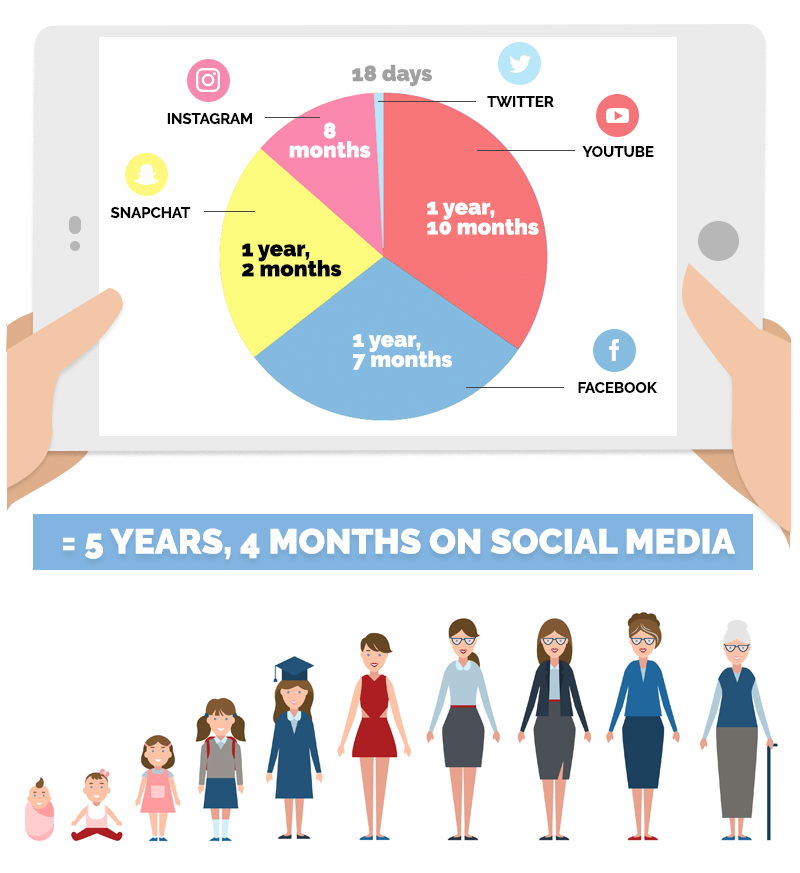 Infographics by MediaKix Influencer Marketing These averages are across all age demographics. When we only look at people under 30, a dramatic increase in social and screen time spent is observed. Teens can occupy upwards of 9 hours a day on social media or behind a screen. However, millennials can spend up to 18 hours a day consuming media in the form of movies, podcasts, social media, video games, reading, etc. This is an astounding amount of time spent on digital devices. Research studies vary, but it’s clear that increased use is only limited by the confines of a 24-hour day, and basic human needs such as sleep. Only 20% of Americans regularly attend church, and only 2 in 10 millennials consider regular church attendance important. If we consider time spent “in church,” a member who attends twice a week for a worship service and one other event only engages for four to five hours a week. How we respond to this reality either represents a challenge or an untapped opportunity. These statistics may seem bleak for our mission, but there’s another way to look at the situation. How can we reach the 80%? Simple. We go and meet them where they spend their time, not where we want them to be. We have nine or more hours a day to connect with them. Part of this effort must utilize digital technologies to better understand behavior and needs before creating programs or resources that satisfy our assumptions about our target audience. People are googling for God. Each year there are millions of Google searches for answers to questions like:
Thirty thousand people search the keywords “church online” every month, and they mostly find opportunities to watch people in a building. People searching for answers need more than a program to watch. At any given time, 22-28% of people are in crisis in the United States and Canada, says Samuel Neves, Associate Director of Communications, General Conference of Seventh-day Adventists. This amounts to 80 million+ people who need support. Crisis can be defined as loss of a loved one, illness, divorce, loss of a job, depression, drug addition, food insecurity, etc. For those who search for answers and comfort online, who is there to answer their questions and help them spiritually? In addition, Neves says, the two main content categories people search online alone are religion and pornography. Both search categories are related to the need for relationships and connection. How can we steer seekers in a healthy direction? 90% of surveyed people have used social media to communicate with a brand, and millennials prefer to reach out to an organization via social media rather than traditional channels like phone or email. This brings me to my next point: not everyone is ready to come to church; some are not even ready to discuss their issues in person. Over four million people visit North American Division church/ministry websites each year, and countless more engage on social media. The Church can be a voice that answers back to those seeking help through these channels and help open a door for a seeker’s spiritual experience. The digital mission field is vast and not restricted by geographical locations. 42% of the world’s population is on social media, and 77% of Americans are on social media. Every inhabited continent is represented in the digital space. While Christianity is on the decline in the West, it has never been easier to reach people. I believe the next Great Awakening will be a digital one, and reaching the digital mission field is our generation’s great commission. Therefore go and make disciples of all nations, baptizing them in the name of the Father and of the Son and of the Holy Spirit, and teaching them to obey everything I have commanded you. And surely I am with you always, to the very end of the age (Matthew 28:19-20). 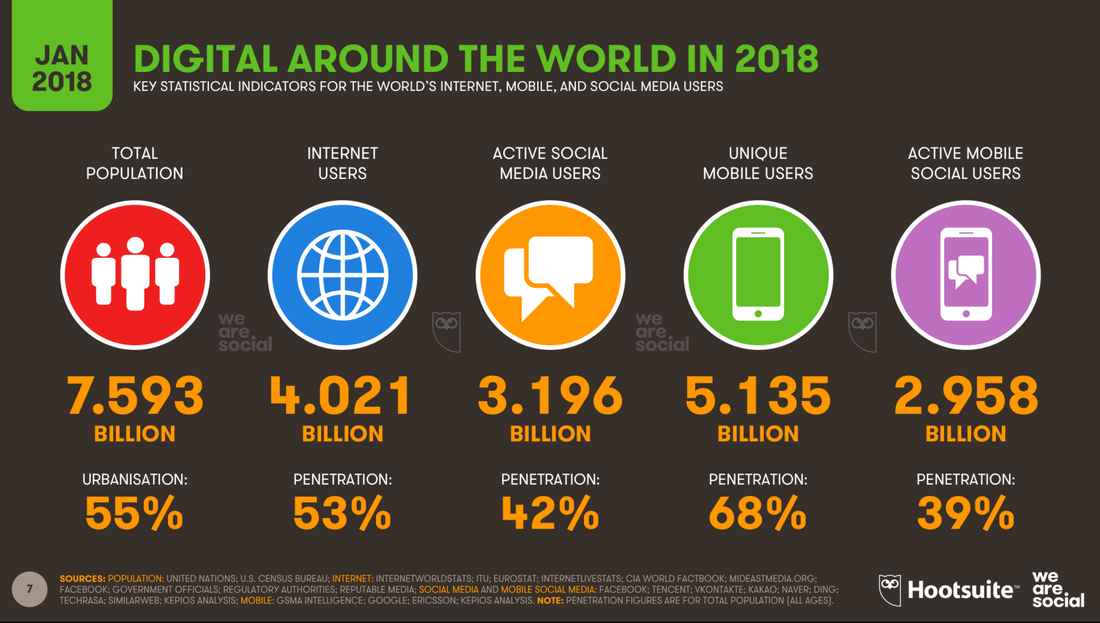 Jason AlexisDigital Strategist for PastorsLine and co-author of reTHINK.Ministry.  With immense love... how many church members does it take to change a light bulb?No, really. All kidding aside here. Is it something that anyone can do? Or does it require filling out forms? Perhaps a committee? Yes, a little absurd and over the top, but a satirical article in the Babylon Bee used this example to point to a more serious cycle that many churches and ministries are caught up in. As the article explains, a church deacon noticed a faulty light bulb in the church’s foyer area. He turned in the required “light bulb change request” paperwork for discussion at the next business meeting. After some cancellations due to winter weather, a meeting finally took place and the members voted unanimously to change the bulb. Now, as the article reports, all that needs to be done “is pass a vote to create a light bulb committee, elect a committee chair, and then get out of the way and let them do their job.” Sound familiar? Sure it does.Churches and ministries want, and in fact need, to be accountable. After all, they should be good stewards of the resources they have received—often people’s hard-earned donations. So, there is usually some type of management hierarchy, perhaps a Board of Governors. Often, a manual is created with procedures and forms. It makes sense because, again, it’s not a one-person show. It’s not a ‘you-based’ organization. It’s a God-based one. Clearly, though, there can be some overkill. And that’s what we’re talking about here. Situations which are out of balance. In other words, despite your place on the church spectrum, how often does your approval process cost you more than the relative cost of the item you are voting to approve? Let’s go back to the light bulb for just a minute or two… Picture a church foyer. A modest, 5-light chandelier hangs at the center with one dark bulb. At the moment, an energy saver light bulb to fit that light fixture would cost between $10-20. Now picture the business committee meeting. Five people sit around a table. Each has donated the time to travel to church and back home (let’s call it a 30 minute round trip) + the meeting time—perhaps somewhere between 1-2 hours. At a minimum, that’s about 8 people hours. The table they are seated around has coffee, tea, water, juice and two kinds of cookies. Someone took the time to buy those items and set them up—more people time. All this time has a cost: time away from work, family, hobbies and rest; time which could have be spent spreading the Good Word and/or ministering to those in need…..not to mention the cost of the refreshments. (Now we are kidding...a little.) Granted, the meeting may deal with other things besides a faulty light bulb but how many of those things are similar? So, does this approach serve our goals? We suggest that it does not and would like to propose a path in addition to the committee methodology which, again, IS an appropriate one for big and/or relatively expensive decisions. Another way for consideration.Let’s call it “Short and Simple”: a protocol in place to make quick decisions—which are cheap relative to your resource budget—without affecting your general governance policies and procedures.
A category where Short and Simple would work excellently is new ideas, especially adoption of digital technologies and strategies. The Short and Simple procedure could be something like this:
This protocol allows you to maximize your goals by facilitating a lot of free, or minimal cost, trials and errors. In addition, it frees up a lot of people time that can be spent doing more relevant things to build God’s kingdom. Kaleb EiseleCreator, editor, and social media manager of Humans of Adventism. 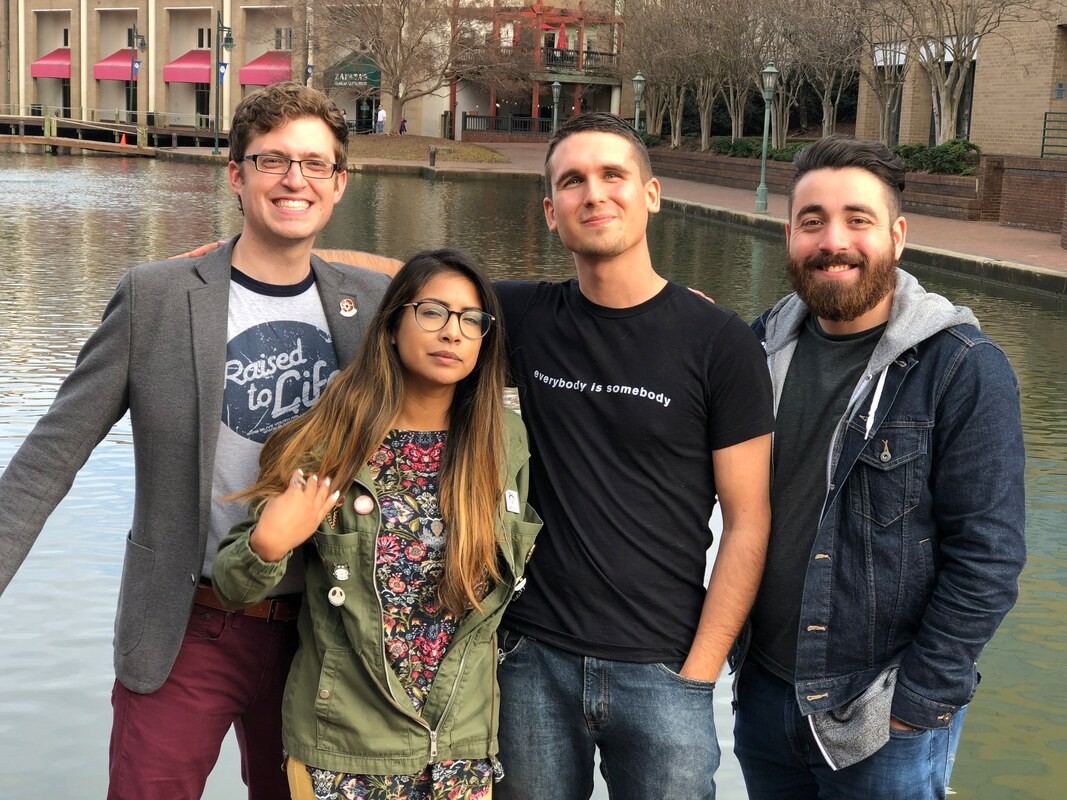 I saw stage lights, wisps of smoke-machine smoke, and dozens of featureless audience heads as I heard the question. “How can we find community after college?” came the host’s voice from the speakers. I hadn’t planned on being on stage that evening. Like everyone else attending the young adult conference that weekend, I’d grabbed a ticket online and made travel plans to attend, hoping to be inspired by the leaders the conference was bringing in. I was humbled when I got the call to appear as a guest on a live podcast recording they were producing Sabbath evening. See, I’ve developed a reputation now. When I attend events like this, I never walk into a room where I don’t know anyone. The series of handshakes and hugs as I greeted several of my friends--some I was meeting face-to-face for the first time--earned me a reasonable amount of teasing. But it hasn’t always been this way. On paper, I should be the person who doesn't know anyone. I live in a country town in South Carolina, far from the vast majority of my Adventist peers. I didn’t join my friends at Andrews, Southern, or any of the big SDA college areas, but moved away with my wife shortly after high school. Yet, if there’s one thing that I am increasingly known for these days, it’s for my love of building community. I started Humans of Adventism from a cell phone in a work truck. Though my physical community was small at the time, I began to grow more and more relationships through what I had: my cell phone. It turned out that I was able to do quite a lot with that, and what was then a page with less than 100 readers developed over the next year and a half into one with over 5,000. No corporate sponsorship, no office, no additional equipment. We underestimate the power we hold in our online content. Used correctly, social media can be used to connect and mobilize an unbelievable amount of people, and the community created there drives real-world changes. Take, for instance, the shirts we designed from the website Teespring. The design was simple: two words, “Adventist. Human.” People read our content, bought the shirts, and wore the message in their own contexts. In Orlando one friend of ours was wearing his in the mall. A woman and her son stopped him and asked if he was familiar with any Adventist churches in the area. The man was able to guide them. Here in Orangeburg my grandparents wear theirs around town. Recently they spoke with someone working at a local fast food place about Adventism, they had questions about some of the content they had seen online. I’ve been stopped numerous times by both Adventists and others to talk about my shirt. Several months ago I met a young man who had taken a new job at our conference. Though he didn’t know anyone there, he recognized one of his coworkers from her story on Humans of Adventism. It gave them common ground to begin a friendship. Non-Adventist friends point to the HoA community as a positive example of Christianity, share our posts, and offer meaningful insight into their own thoughts on religion and God. This, in my opinion, is church. The relationships we are building and things we are doing to spread the gospel together online are a digital manifestation of many of the qualities the early church had. Humans of Adventism is one of numerous emerging ministries that are both sharing the information about God and building relationships with His people. We’re one of many reaching back to and supporting others who are just now starting ministries of their own. Personally, my online church community is what drives me to be involved in my local church. Because I am not dependent on my local church to provide my sense of community, I can reframe how I go about being involved. My local church has become my mission field--a cause I care deeply about, because the pressure for it to fill my spiritual and personal needs is largely alleviated by being involved online.
Because of the power social media can have, it’s crucial that we consider the effects our content will have on our audience. Both our negativity and our positivity grow exponentially as they are spread by our audience and friends online. When it comes to church, we can create a community of people that attack or a community of people that heal. I know which one I’d like to be part of. Related blogs: Felecia Datus, Center for Online EvangelismThe Center for Online Evangelism is a missionary project devoted to developing online mission stations.  Some time ago, a friend on Facebook posted something that upset me. Not only did this person write something inflammatory about someone I respected, but what the individual posted as a ‘fact’ was actually wrong. I had sat in on a meeting in which the matter was discussed and cleared. And now, this person was speaking as if they had the facts. The post was garnering some attention and there was an online discussion going on in the comments section. I sensed my irritation growing the more I read the discussion. I decided to jump in. I was going to prove to everyone that the “poster” was ignorant on the subject and needed to be corrected. I began to type. “Everyone will see how wrong you are! You’re spreading lies and I’m calling you out on it!” I smiled to myself and closed the tab. I knew I had won the argument. I envisioned success; those online would see that the person was wrong and I was right. But my plan backfired. Instead of seeing my point, as the discussion continued, I was attacked and accused of being a liar. Hurt, embarrassed, and angrier than I was at first, I fought back. Then it got worse. I did what I thought was the next best thing in social media land; I hit the Almighty Unfriend Button. Would the situation have turned out differently if I had reacted in another way? How could a friendship suddenly end with just a click of a button because of words online? Did both sides represent Jesus Christ well? In the end, I realized I lost a friendship in order to "win" an argument online. If you really want to “win” in online discussions, here are 5 things to remember:
Basic tips:
As a digital disciple, your words serve as a testimony of your faith. When you engage, bring light and give instruction. Use your influence to represent your Lord and showcase His wisdom. Winning arguments online isn’t about gaining victory over someone else; it’s about gaining victory over yourself. Reposted with permission from centerforonlineevangelism.org. Related resources:
Download a free presentation and resource on Social Media Etiquette. Kaleb EiseleCreator, editor, and social media manager of Humans of Adventism.  Photo Credit: Christa McConnell Photography You are Adventism. I recently had the opportunity to speak at a large communication conference. As I stood before a room of film workers, bloggers, internet personalities, and communications students, I couldn’t help but reflect on how I’d gotten there. I am not a pastor. I am not an employee of the church at all. I don’t have a degree in communications, and I’ve never been employed, despite my best efforts, in the fields represented at this conference. Yet, there I stood, speaking as a humble authority on digital evangelism. How? Two-and-a-half years ago I graduated from the College of Charleston. I had miraculously been given the opportunity to speak to my classmates and their gathered families, an enormous crowd of people who had no idea who I was. I was not the valedictorian, I’d never worked in student government, and yet again I had managed to land myself on a platform with relatively little tangible merit. On paper, there was no reason to have me speak at my own graduation. Even the professors who knew me well wondered at how this had happened. But it did. While I’ll never know all the intricate aspects of how the events in my life come to be, I’ve learned that many of us have been believing a lie. We often think that titles and money determine our ability to impact the world. To some degree, that’s true. Pastors are invited to speak at evangelistic series far more often than anyone else, business managers handle a large amount of responsibility in the countless companies across America, and celebrities can dramatically shift consumers toward or against the products we buy. But in my experience these aren’t the only ways to impact the world. Early in 2017 I went public with a storytelling Facebook page called “Humans of Adventism.” The mechanics were simple, mostly because my resources were incredibly limited. I had no money, no big names backing the page, and very little ability to do anything outside of what I could manage from my cell phone. I had an idea, and I had my phone. From my work truck I began to conduct interviews. I started with the people I knew--other writers and students, even a few family members. From there I began exploring deeper into the Adventists I found on social media and reaching out to them for their stories. It turned out most people didn’t really care about my qualifications at all, they cared about what I was doing and the effect it was having on the world. The Humans of Adventism community now consists of over 4,000 members and is growing more quickly than ever. I don’t know who made this phrase up, but it’s stuck with me since I heard it. God doesn’t call the qualified, he qualifies those he calls. It’s true. We can own our faith. We can define what it means to be a Seventh-day Adventist. It’s a scary responsibility, but God has also given us so much freedom here. He led me to speak to my fellow graduates, then on to present at the Society of Adventist Communicators conference, among other things. He didn’t make me wait for titles, and I would guess this is true for the rest of us, too. Maybe we’re holding ourselves back. Maybe we already have permission. Is God calling you to realize a digital ministry idea? What's holding you back? Kaleb Eisele is the Social Media Director for the Orangeburg Seventh-day Adventist Church. Humans of Adventism is an independent storytelling platform that shares the lives and perspectives of Seventh-day Adventists. It is entirely funded by its readers. You can sponsor Humans of Adventism for as little as $5/month by visiting patreon.com/adventisthumans, or by purchasing an “Adventist Human” shirt from teespring.com/adventisthuman.
|
Archives
August 2020
Categories
All
|
||||||||

- Home
- BLOG
-
RESOURCES
-
RESOURCE MENU
>
- ADVENTIST IDENTITY GUIDELINES
- BIG DATA RESOURCES
- BRANDING, IMAGE & DESIGN RESOURCES
- CHURCH/MINISTRY SPECIFIC RESOURCES
- COPYRIGHT & TRADEMARK BASICS
- COURSES
- EMAIL RESOURCES
- GUIDANCE FOR HIRING SOCIAL MEDIA POSITIONS
- PODCASTS
- REPORTS & CASE STUDIES
- SOCIAL MEDIA RESOURCES
- (SOCIAL) VIDEO RESOURCES >
- TEXTING 4 CHURCHES
- TRACKING & ANALTYICS
- WATCH VIDEOS & TUTORIALS
- WEBSITE TIPS
- SOCIAL MEDIA GUIDELINES
-
RESOURCE MENU
>
- SEO
- Digital Discipleship & Evangelism
- COVID-19 RESOURCES
- eNEWSLETTER
 RSS Feed